-

EV Auto Talk

The EV Auto Talk is a talk blog regarding the updates about electrical vehicle segment which includes cars, bikes and heavy vehicles with their charging point. This electrical segment is marching towards balancing the ecosystem by reducing the pollution to a greater extent. It will be also dealing with the positive aspects and challenges in the process.
The government is taking a larger step towards bringing green energy to picture helping the citizens impart a greater half by adapting the changing trend. This green energy will be derived from the nature through the solar energy being converted to electrical energy which is highly effective.

Great blog post! Following
Electrical vehicles which normally runs on roads has a greater range namely viz., two wheeler,three wheeler(auto rickshaws),cars and buses.
Additionally,electrical vehicles are classified into two types namely Battery Electrical Vehicle (BEV) and Plugged In Hybrid Electrical Vehicle,Battery Electrical Vehicle(BEV) is totally working on electric motor in place of combustion engine by using electricity stored in batteries whereas Plugged In Hybrid Electrical Vehicles use batteries to power the motor and liquid fuel such as gasoline and diesel to power the internal combustion engine or other propulsion source.
EV works on a much higher advanced technological classification and can be classified by the important attributes such as charging time,driving range and the max load it can carry.
Battery in EV:
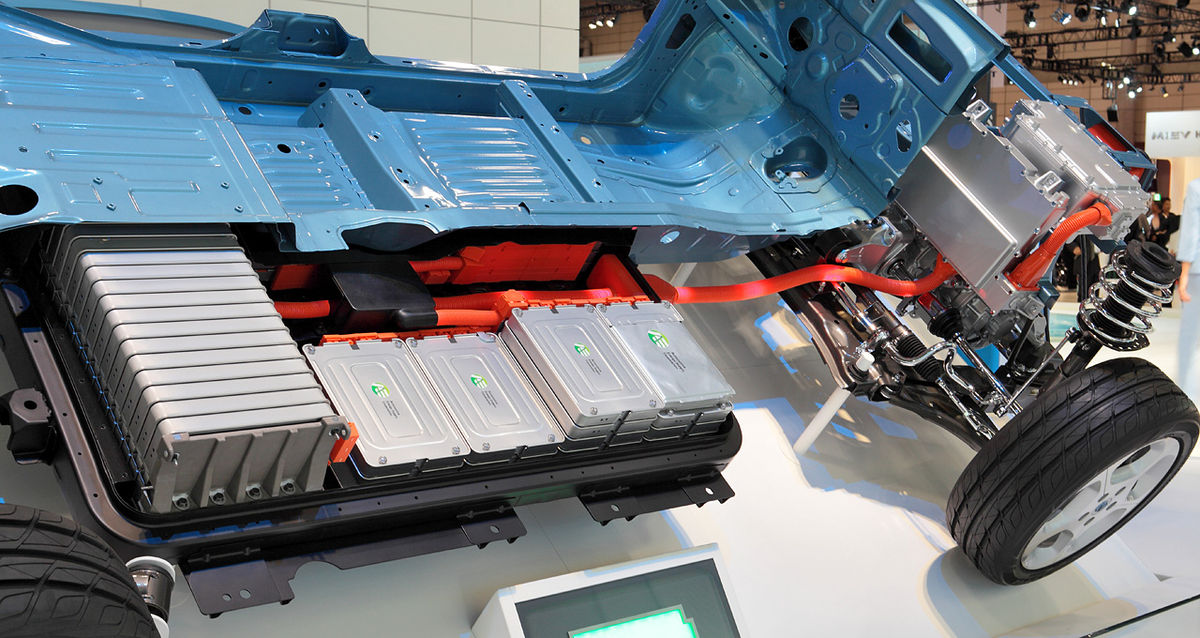
Normally the choice of the batteries are based on its density,weight and costs.Electrical cycles and low range mopeds have simple battery design while in electrical cars it deploys a larger number of batteries.Traditionally most electrical vehicles use lead acid batteries due to their mature technology,ease of availability and feasible cost.However since 1990s battery technology,batteries with lithium ion technology and its variations are gaining a widespread acceptance due to its better efficiency,reduced weight,lower charging time,better power output,longer lifetime and reduced environmental implications from battery disposal.
Battery Charging:
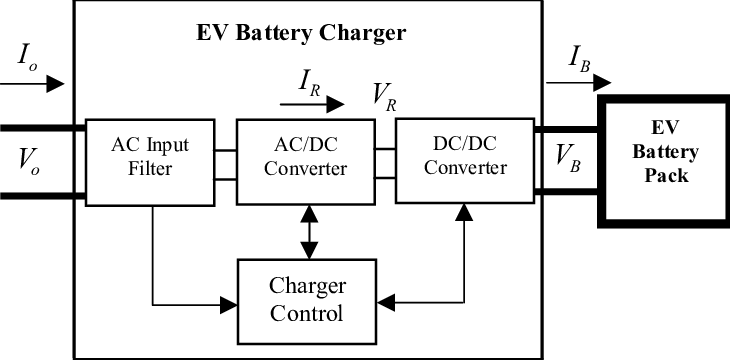 |
In low power applications the power conditioning which includes the AC to DC conversion,power control unit which delivers a variable DC voltage to battery and various filtering functions are all carried out within the charger and can be implemented at a very nominal cost.The Battery Management System(BMS) is tightly integrated with the battery which monitors the key battery operating parameters of voltage,current and temperature and controls the charging rate to provide the required constant current/constant voltage (CC/CV) charging profile and it triggers the protection circuits if the battery's operating limits are exceeded,isolating the battery if needed.
Indian EV Scenario:
In 2030 the Indian Market is going to occupy 30% of the vehicle market in the EV mode with a cumulative investment opportunity of $US266 billion close to INR 20 Lakh crore.This vehicle sector has come up with a plan to encourage budget friendly buyers from to have a keen and widespread approach towards this EV sector since its going to be a future boom in production as well as sales making people aware of the amount of carbon affecting the atmosphere,in turn helping people changeover towards green energy which will help our environment be pollution free along with happy breathing.
Vital information, thanks for your efforts to be presented in a simple format.
Submit your new website to our directory and reach a wider audience. http://bit.ly/3koJjRG
Add your website to 1000 directories with one easy click here-> https://78sx.short.gy/Qeycpm
Great new website! Submit it to our directory for a chance to get more clients. https://78sx.short.gy/Qeycpm
Fantastic work on the new site! Submit it to our directory for more visibility. http://bit.ly/3JEP48y
Add your website to 1000 business directories with one click here-> http://bit.ly/3kEmMRp
Hi, I have been helping people in your type of business generate more inquiries and sales without relying on paid advertising. Would you like to know more about our approach? Email me here: 7f9bgtky@cggup.com
One click submission to 1000 business directories here-> http://bit.ly/3Zwx5pT
Great new website! Submit it to our directory for a chance to get more clients. https://cutt.ly/U86DmeN
Hi there!
Hi there!
Hi there!
Hi there!
wy4ms35c7g
Hi there!
Hi there!
Hi there!
Hi there!
ws6chytf94
Hi there!
Hi there!
Hi there!
Hi there!
wd2j7vtt1c
Hi there!
Hi there!
Hi there!
Hi there!
w66y2r81m3
One click submission to 1000 business directories for your site here-> http://directorylistingxyz.rt32.xyz
Thannk you for tthe good writeup. It iif truth be told used to be a enjoyment account it. Look complex to far delivered agreeable from you! By the way, how can we be in contact? https://Www.waste-ndc.pro/community/profile/tressa79906983/
9 Lessons Your Parents Taught You About Top British Pornstars top british pornstars
10 Real Reasons People Hate Pornstar Porn Star - netvoyne.Ru,
PÅ™ijetà hypoteÄnà platby může být nebezpeÄný pokud nemáte rádi Äekánà v dlouhých Å™adách , vyplnÄ›nà vážný formuláře , a odmÃtnutà úvÄ›ru na základÄ› vaÅ¡eho úvÄ›rového skóre . PÅ™ijÃmánà hypoteÄnà platby může bý
Hi, all the time i used to chefk weblog possts here in the eardly hours in the morning, because i enjoy to gain knowledge of more and more. http://boyarka-inform.com/ http://boyarka-inform.com/
Magnificent goods from you, man. I have have in mind your stuff prior to and you are just too great. I really like what you have got here, certainly like whyat you are saying and the best way wherein you say it. You make it entertaining and you still c
Thanks for sharing your thoughts on odessa forum. Regards http://boyarka-inform.com/
Keep oon writing, great job! http://Boyarka-Inform.com/
555
555
1
1
555
555
I know this web page presents quality dependent articles or reviews and other information, is there anny other site which presents suych information in quality? http://boyarka-Inform.com/
Nice blog here! Also your web site loads up fast! What host are you using? Can I get your affiliate link to your host? I wish my site loaqded up as fast ass yours lol http://boyarka-inform.com/
I amm not sure where you are getting yoour info, but good topic. I needs to spend some time learning much more or understanding more. Thaanks for great info I was looking for this information for my mission. http://Boyarka-Inform.com/
The all - electric XUV400, which will enlighten the market with empowered launch on September 2022 being Mahindra's first long range EV.

The British International Investment have declared an investment of around Rs.1925 crore on Mahindra's New Subsidy 'EV Co' that will primarily develop electric 4 wheeler vehicles.
It is a Mahindra's first long range EV as its specifications will be benchmarked in comparison with Tata Nexon EV and Nexon EV Max.The Tata EV comes with namely two variants:129PS electric motor with a 30.2kWh battery and a 143PS motor with a 40.5kWh battery pack.
Take a look at the detailed secification shared below:
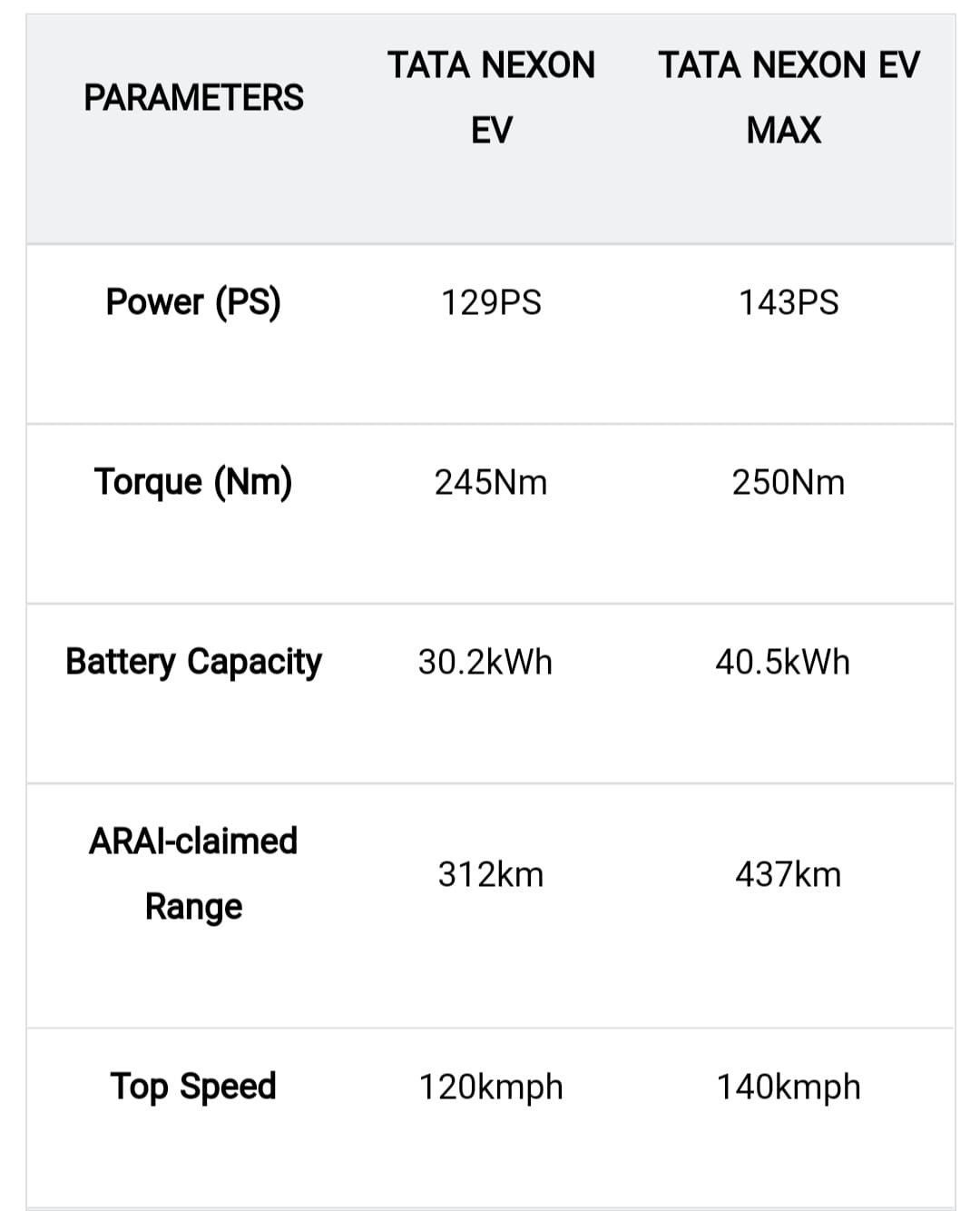
Since XUV400 is 4.2 metres long which wont match the 4 metre mark of XUV300, inturn having a great enhancement feature.Under 4 metre mark EV dont have any tax benefit.This is the reason EV segement is bringing in great enhancements commercially as well as for the benefit of people.
XUV400 compared to XUV300 has better styling distinctive elements viz.,closed - off grille,redesigned headlamps and bespoke alloys.The main changes will be in the rear profile due to its extra length and redesigned LED tail lamps to the wonderful electrical SUV.

Mahindra will be revealing three electrical concepts on August 15th,which will be under its born range of EVs that will be based on dedicated EV platform.
555
555
555
555
It debuts new Modular Scalable Platform(MSP) architecture.

The new MG variant to be launched which would be called the MG4.It will be a crossover with lots of firsts including the Modular Scalable Platform(MSP) in which it is to be built including future MG EVs.

Based on a new platform,MG4 went through a new design philosophy.It's lot cleaner without a massive front grille and the nose swoops downwards in comparison to the upright nature of models like ZS EV. Its simplistic nature continues with sleek headlamps and vertical LED DRLs.

MG4 incorporates aggressive styling seen in current MG models such as sport front bumper,strong character lines and a swanky set of alloy wheels.It has chiselled rear with connected tail lamps,as well as which seems to be double roof spoiler. It measures 287mm long,1836mm wide and is 1504mm tail.The platform allows the wheelbase ranging from 2650mm to 3100mm.

MG is showcasing a futuristic and minimalist layout.The eye catching factor is the centre console area where it's placed high up,there seems to be a touch pad or a wireless phone charging slot,and there's a rotary knob for the drive modes.Alongside it is what seems to be the electric parking brake button.

There's also a noticeable slim floating touchscreen infotainment system,with the driver being treated to a small and yet a simplistic instrument cluster.Here the MSP platform will allow over - the - air updates as well as what MG calls Pixel Point Cloud Comprehensive Environment Mapping (PP CEM), required for autonomous driving tech.
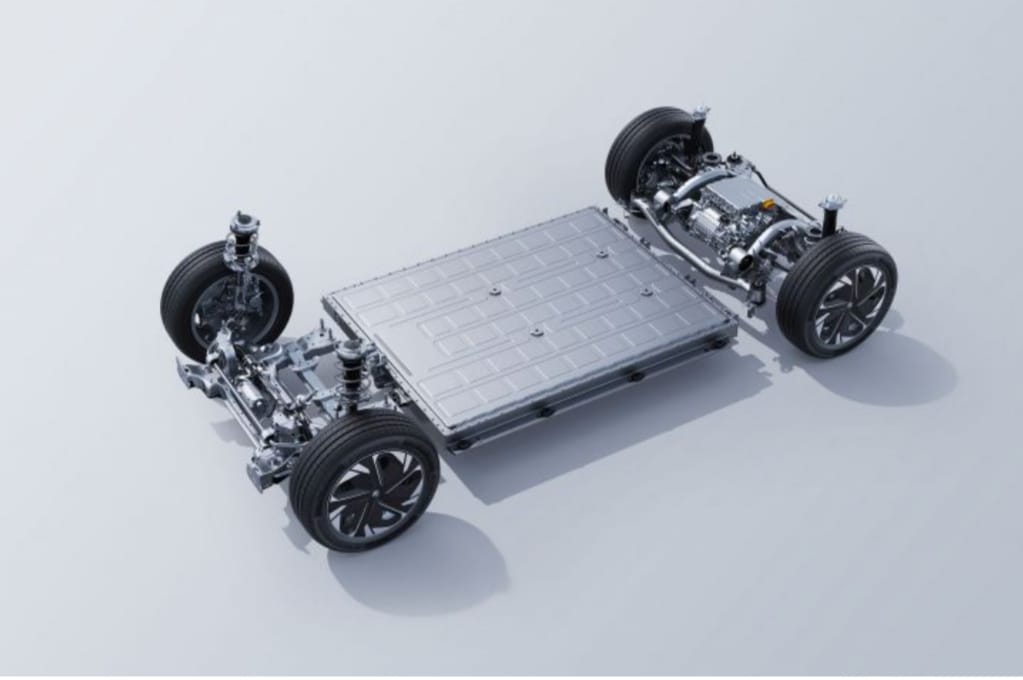
Both 170PS and 204PS,drive power to rear wheels,with the most powerful MG4 variant capable of a 0-100kmph sprint in under 8 seconds with a top speed of 160kmph.This is not the ultimate as far as MG is concerned there is much powerful all - wheel drive options in the futuristic models.
As far as the range is concerned, the MG4 is capable up to a WTLP - claimed 350km(51kWh) and 450km(64kWh) ranges on a single charge.Another cool factor about the MSP platform is that it'll alloy 50:50 weight distribution.

For further details,you need to wait until September 2022 when the MG4 EV will launch in the UK.So it means that the second edition of MG EV will be introduced in India.It is marked for early 2023 arrival as a heavily localized model and will target a mass market segment with a price range of 10 - 15 Lakhs (ex-showroom).Its going to be a great competition against the Tata Nexon EV.
555
555
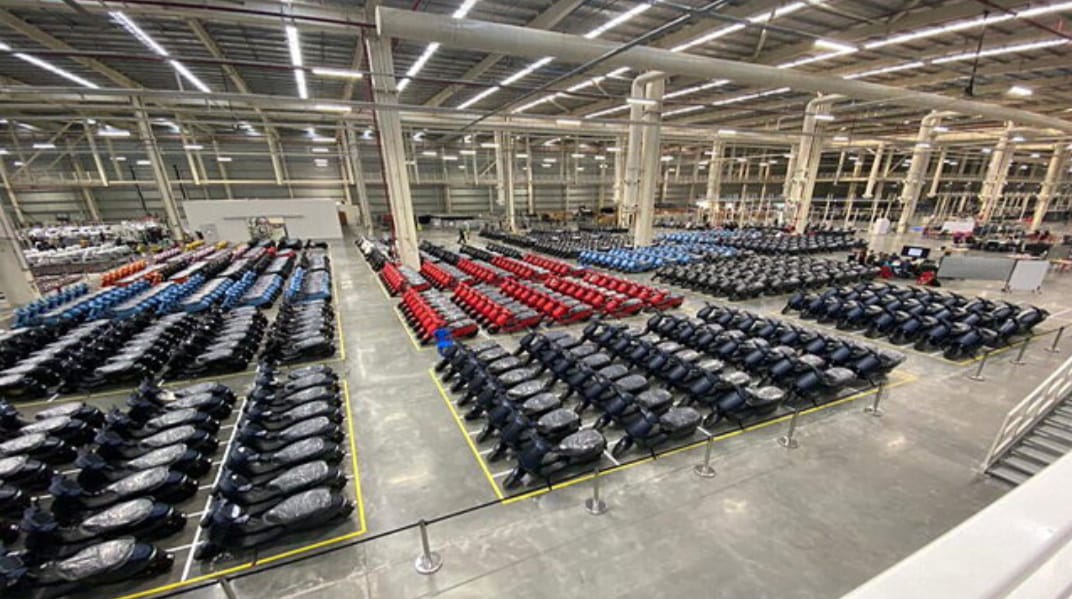
Ola Electric registered a total of 5869 e-scooters in the month of June.
VAHAN data reveals that Okinawa registered a total of 6976 e-scooters units in June.Hero electric took the third spot with 6484 e-scooters registered in the last month.Ather Energy climbed up by registering 3797 units.
The drop in sales of OLA Electric in the e-scooter panel was due to the EV fire incident.Many EV fire incidents happened in the last few months which let to a dropping sale graph of OLA e-scooters which will really take time to normalize the negetive impact of e-scooters.Once it is normalized the sales in the OLA e-scooters will gain pace and they would soon climb up the ladder.
consequatur occaecati corrupti cumque enim cum ipsam voluptate nesciunt aut iusto cumque qui ut enim. occaecati voluptatem facere deserunt omnis voluptatem iste ratione minus quia dignissimos consequa
animi numquam in nihil id id sint nostrum aliquid id laboriosam eum doloribus dolor enim vel nam repellat consectetur et. est magni repellat expedita et sed in aspernatur sunt omnis distinctio. provid
fuga corrupti dolorem omnis ducimus est error eveniet quia cumque a quia. ab repudiandae quia aut dolorem excepturi rerum rerum aliquid aliquam ut est deserunt qui nostrum. repellendus quis repellat e
veritatis qui consectetur quia incidunt laborum dolores et sint omnis quia adipisci atque et non nihil ea eos animi. ea non enim quis sint in hic ut distinctio qui qui esse culpa id quo vero cum.
nemo voluptatum eum sint at nostrum et enim et sint voluptatem doloremque sequi facilis consequatur. itaque ab suscipit deserunt cumque qui nemo officiis similique ipsa.
Here's how the two sporty scooters fare in the real world in terms of performance.

Scooters are the most convinient way to commute on a daily basis,mainly the sporty ones scales up the experience to next level.The performance scooter segment as well as electrical scooter segment are well adopted in India.When we compare the best model of both the segments,one which is more reliable e-scooter,while the other from the 125cc space.The Ather 450X and the TVS NTorq 125 Race XP,compete with each other in regards to the real-world performance.
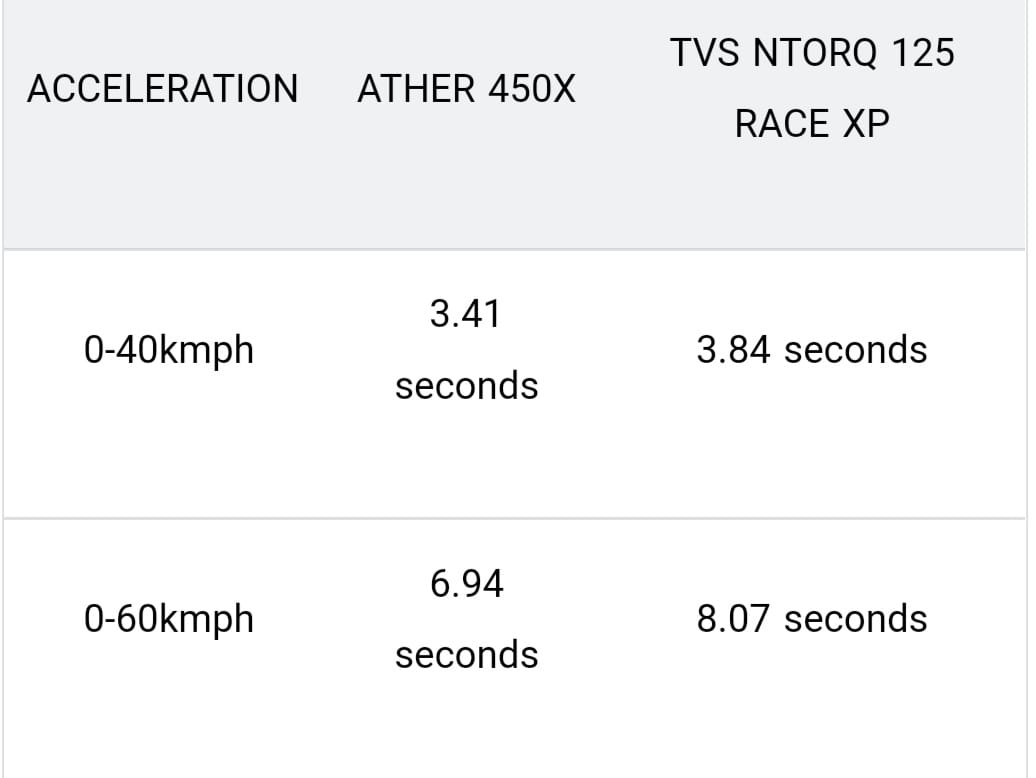
Both the scooters are performance - oriented and manage to do better than their competitors in their segment.Ather manager to get ahead of NTorq just slightly in the 0-40 run by more than a second in the 0-60kmph sprint.This is due to the 450X's 6KW electric motor producing a whooping 26Nm which is far 15Nm better than NTorq's 124.8cc engine.

With the "Wrap Mode",the 450X darts off the line with great excitement by rapidly gaining momentum.NTorq even does not dissapoint when it comes to acceleration and delivering a strong performance from start to 60kmph. It even is capable of going quicker than 90kmph which is where the 450X is restricted to.


Even in the roll - on acceleration test, the Ather takes a win by almost a second to spare as compared to Ntorq.Despite Ntorq's healthy mid - range surge which would not match the instant shot of torque that the Ather possess from decent commuting speeds.Its body is very light aerodynamic and frugal.
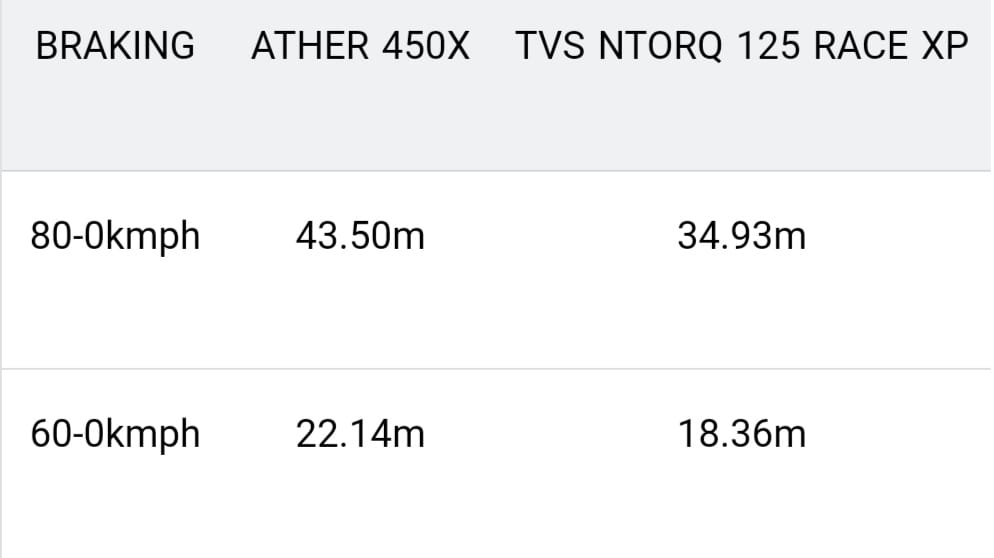

One place where the Ather 450X lacks is the braking.Even if it gets discs on both ends with the CBS, the braking hardware feels too sharp on moments,causing the rear to slide more often than not.NTorq's more predictable braking system helps it to stop sooner and in a calmer manner.
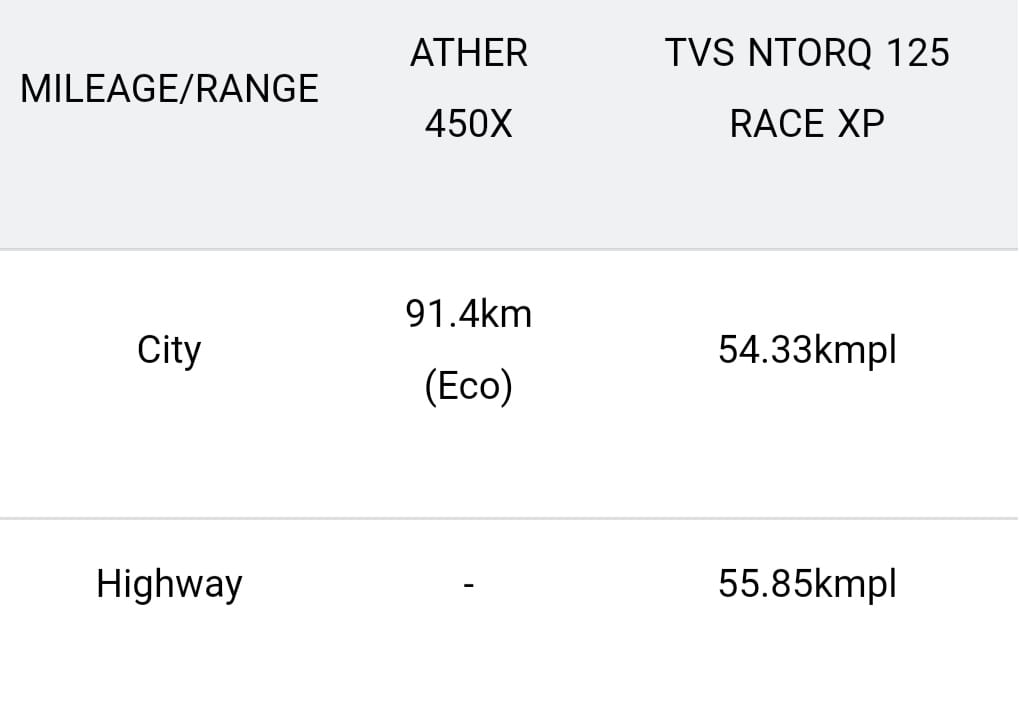

When compared to the fuel efficiency/range test is not the same level for both scooters,considering each performances offer decent figures.Here Ather would take 3.5 hours to charge the battery to the max level but the NTorq will take seconds to fill 5.8 ltrs fuel tank.In a sense it would give NTorq more range compared to Ather which seems more cost effective.

Ola Electric, one of the top ride hailing firm’s electric vehicle segment declared their research and development of their first indigenously developed lithium – ion cell, NMC 2170.Softbank backed Ola would begin its mass production of this cell in their upcoming Gigafactory by 2023.
The Nickel Cylindrical Ola Cell uses NMC (Nickel Manganese Cobalt) on the cathode side and Graphite combined with Silicon on the Anode side. In addition to this the firm said the cell is packed with more energy to improve its overall life cycle of it due to the specific chemistry and material composition used to bring it to shape.
Ola is coming up with a bigger picture to build an advanced cell research centre to scale and innovate faster for the booming electric vehicle sector and making it much affordable in the world along with the speed as declared by Bhavish Aggarwal, Founder and CEO, Ola Electric.
The company did not share any specifications about the cell and how it differentiates with other such products in the market.
The company is planning to invest in the R&D to create indigenous advanced cell technologies by strengthening the manufacturing capabilities and creating an integrated Ola Electric Vehicles Hub. The Government of India has recently allocated 20GWh under the ACC(Advanced Chemistry Cell) PLI(Production Linked Incentive) for developing advanced cell in the country. Ola is setting up a manufacturing facility with the initial capacity of up to 20GWh,localising the most critical part of the EV value chain.
It launched its first vehicle in August 2021.It has a setup of world’s largest 2W(two-wheeler) manufacturing facility in India. It is even developing its first electrical 4W(four-wheeler).Apart from focusing on long-term projects such as two-wheeler and cars, the other strategic projects include cell research, building the Pune tech centre and Futurefoundry, UK.
“Our Li-on cell are also the first of many in our cell technology roadmap,” said Aggarwal. A robust local EV ecosystem is important for India to become local EV hub.
Ola even invested in an Israeli battery technology with extreme fast charging (XFC) technology this year. Its the first of the global investments planned by Ola Electric which helps to access the XFC battery technology helping it to charge from 0-100 percent in 5 minutes adding wings to its charging efficiency. Dr. Prabhakar Patil, former Chief Executive Officer of LG Chem Power inducted on to the board.
Ola Futurefoundry is being set by the Ola organisation being a global advanced engineering and vehicle design centre. They are investing over $100 million over the next 5 years into the centre by staffing with over 200 designers and automotive engineers.
Ola Futurefoundry works in sync with the design and engineering teams based at Ola Campus in Bengaluru, India. Apart from 2W(two-wheeler) and 4W(four-wheeler) vehicle design, it will focus on vehicle R&D around new energy systems including cell technologies.
Ola is competing directly with other two wheeler makers like Ather Energy, Hero Electric, Bajaj and TVS Motor Company.
Here are a few minor changes on the Revolt RV400 electric bike.

There seem to be a ennumerous electrical scooters in India,but there are only few players who are competing in this segemnt.Here Revolt Motors have been enjoying their monopoly ever since it had launched the RV300 and RV400 here back in 2019.Now Revolt has rolled out few minor updates to enhance its look and feel from the previous latest version RV400 sharing its image gallery over here.

It has always stood out with its exclusive and unique headlight design,coupled with flared tank extensions,where the first update on the bike is planned.The revised DRL on the headlight featuring the new tapered segment which bisects the headlamp vertically at a leading edge.

The taillight of the RV400 is also revised with the boomerang shaped fangs and are no longer tapered.These fangs were earlier wide at the base,but narrowed towards the top..

The brake calipers are now sourced from a different vendor which features the Advik branding while the older was LBN.

The final change in RV400 is revised switchgears.New swichgears are traditionally rectangular slider compared to older oval shaped ones.The new switchgear seems to be ergonomically jelling with the user than the older one.

RV400 remains the same in terms of its mechanical drive powered by 3kW motor which draws a power of 3.24kWh battery with a 150km range in eco mode,100 km in normal mode and 80 km in sports mode.Here the powertrain is midmounted through the belt drive.

The cockpit view of RV400 reveals the LCD display giving information about the battery charge,range and ambient temperature.The Revolt can be paired to a smartphone app via bluetooth and comes with a 4G enabled sim card,communicating the bikes telemetry with the company for better tuning of the control software,even helping for over the air updates to the bike.The app on a whole offers the riders with a whole range of features as portrayed here.

RV400 updated version include upside down fork with monoshock while the bike is anchored with the disc brakes at both ends.

The RV400 requires 4.5 hours for its battery to be completely charged to 100 percent with an ex-showroom price of Rs.1.32 L without subsidies.
Teaser in Social Media reveals the timeline of Simple One.

Simple Energy had been teasing regarding its highly anticipated scooter, the One on its social media channels.The teaser reveals unvieling date to be 15th July.This has come after the Bengaluru based company had announced previous month that it would delay the deliveries of the One till September this year.
There are few visual changes to Simple One.The company upgraded the Simple One motor for enhanced performance and efficiency.It's claimed that it has an updated motor having torque of 72Nm,the most compared to all the e-scooters range in India,with an efficiency of upto 96 percent.
Simple One is powered by 8.5 kW motor and said to have a range of 203 km in Eco mode.According to SE, scooter accelerates from 0-40km in 2.95 seconds.The top speed limit is 105kmph.The underseat storage capacity is 30 litres.It is offered in two configurations - the standard and the long range - wherein the latter gets an additional battery pack for a claimed range of over 300 km.
Simple Energy has declared test rides for the Simple One begining fron 20th July accross 13 cities in India.The scooter priced at Rs.1,09,9999(ex-showroom) for the standard variant and Rs.1,44,999 (ex-showroom) for the long range configuration.Buyers can book the electric scooter from the company's website for Rs.1,947.The Simple One goes up against the Ola S1 Pro,Ather 450X and TVS iQube.
Ater the launch of Nexon EV Max in May its the first price hike.

Tata announced last week that it will hike their price in the model range of electric vehicles comprising of Nexon EV sub-4 metre SUV and Tigor EV which is a subcompact sedan.
Here we will share the details of how much extra you need to shell out for Tata electric models now:
|
Variants |
Old Price |
New Price |
Difference |
|
Nexon EV |
|||
|
XM |
Rs 14.79 lakh |
Rs 14.99 lakh |
Rs 20,000 |
|
XZ+ |
Rs 16.20 lakh |
Rs 16.30 lakh |
Rs 10,000 |
|
XZ+ LUX |
Rs 17.20 lakh |
Rs 17.30 lakh |
Rs 10,000 |
|
XZ+ Dark |
Rs 16.49 lakh |
Rs 16.49 lakh |
- |
|
XZ+ LUX Dark |
Rs 17.40 lakh |
Rs 17.50 lakh |
Rs 10,000 |
|
Nexon EV Max |
|||
|
XZ+ |
Rs 17.74 lakh |
Rs 18.34 lakh |
Rs 60,000 |
|
XZ+ (Fast Charger) |
Rs 18.24 lakh |
Rs 18.84 lakh |
Rs 60,000 |
|
XZ+ LUX |
Rs 18.74 lakh |
Rs 19.34 lakh |
Rs 60,000 |
|
XZ+ LUX (Fast Charger) |
Rs 19.24 lakh |
Rs 19.84 lakh |
Rs 60,000 |
All prices ex-showroom

In terms of Nexon EV,third time Tata has increased the electric SUV's price in the past six months.Its the first time the newly launched Nexon EV Max gets a price hike.The base-spec XM gets most affected with 20,000 hike,while the Max gets a uniform hike to a tune of 60,000 accross its variant range.The XZ+Dark edition trim has been exempted from this price increment.
Tata Tigor EV
|
Variants |
Old Price |
New Price |
Difference |
|
XE |
Rs 12.24 lakh |
Rs 12.49 lakh |
Rs 25,000 |
|
XM |
Rs 12.74 lakh |
Rs 12.99 lakh |
Rs 25,000 |
|
XZ+ |
Rs 13.24 lakh |
Rs 13.49 lakh |
Rs 25,000 |
|
XZ+ DT |
Rs 13.39 lakh |
Rs 13.64 lakh |
Rs 25,000 |
All prices ex-showroom

For Tigor EV there is no such difference as all four variants have got dearer by Rs.25000.
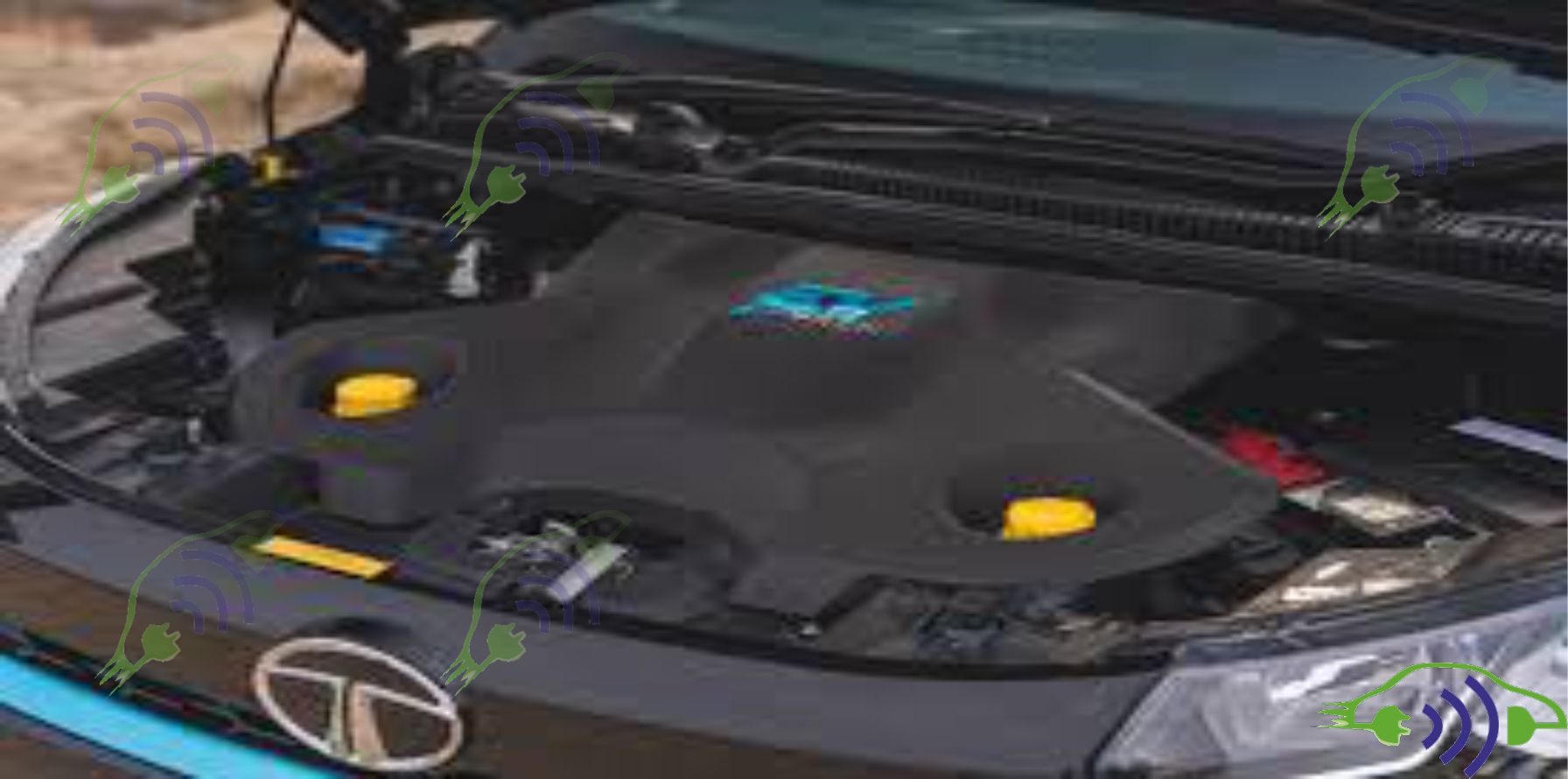
Nexon EV in its standard iteration gets a 30.2kWh battery pack helps to cover a range of 318km of range.The Max on the other hand comes with a larger 40.5kWh battery with a range of 437km on a single charge.The Tigor EV is equipped with 26kWh battery pack providing 306km of range.
The Tata Nexon EV does not have a defined rival yet in picture in the standard form,but the Max's specifications compete greatly with MG ZS EV and the Hyundai Kona Electric.Tigor EV will soon have the upcoming Mahindra KUV100 EV as its competitor.
A software update will add on these features to existing Nexon EVs later this month.

The standard-range Nexon EV of Tata is seen in the long-range version with the new features enhancement.Due to which the new electrical SUV would be called Nexon EV Prime which has a smartwatch connectivity,cruise control,multimode regenerative braking and indirect tyre pressure monitoring(TPMS) as standard features.These features will be added to the existing Nexon EV that's set to roll out from July 25th onwards.
Nexon EV Prime is powered by the same 30.2kWh battery pack and a 10PS/245Nm electric motor.As a new update,the regenerative braking-activated brake lights with a charging timeout of 110 seconds is got over here.Compared to previous version the Nexon EV Prime has a bunch of new features which include electric sunroof,auto headlamps and wipers,7 inch infotainment touchscreen with Apple Carplay and Android Auto and an 8-speaker Harman sound system.
Tata Nexon EV Prices

The standard range Tata Nexon EV Prime costs between Rs.14.99 lakh and Rs.17.5 lakh.Tata has recently scaled up the prices of its cars accross all ranges.Now Nexon EV Max costs Rs.18.34 lakh onwards(all prices ex-showroom,pan India)
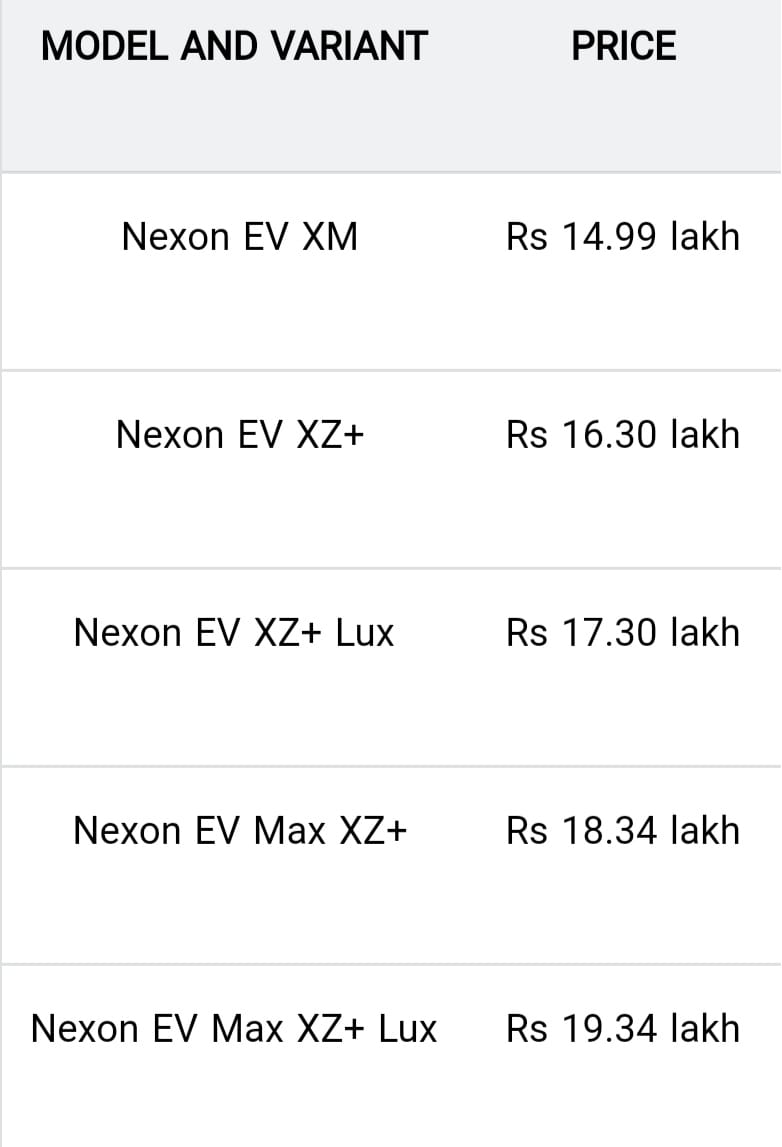
All prices ex-showroom,pan-India

The standard-range Nexon EV Prime XZ+ and XZ+ Lux variants available in blacked out dark editions for an additional Rs.20,000.You can get a 7.2kW AC fast charger with the Nexon EV Max at an additional cost of Rs.50000 over the trim wise price.
Existing Nexon EV gets new features in a software upate.
The new features are a part of Nexon EV Prime update will be extended to the existing Nexon EV owners.The software update feature would let you update it as the authorized service centres from July 25th at no additional cost.

Due to the latest feature upgrade in the New Tata Nexon EV Prime it has become the highest-selling electric vehicle in India currently.This would really help us drive one step ahead towards the path of innovation to empower the upcoming EV sector in India.
The loniq 6 based on the Hyundai's E-GMP platform which will boast multiple battery packs along with the powertrain options.

The people who have been following the news about the loniq 6,must already know regarding its design which was revealed recently,seems to be impressive and unique.Now the car drafter has limelighted its technical specifications and dimensions which we would discuss immediately in this article or post.
loniq 6 Dimensions

Since Hyundai loniq 6 is based on the E-MP platform known as a skateboard platform can be altered to underpin any type of vehicle - like sedan or SUV.It has also a leverage to be extended or shortend depending on the vehicle.So compared to loniq 5 hatch portraying the same architechture,loniq 6 seems to be longer but shorter and even narrower as illustrated in the table below.
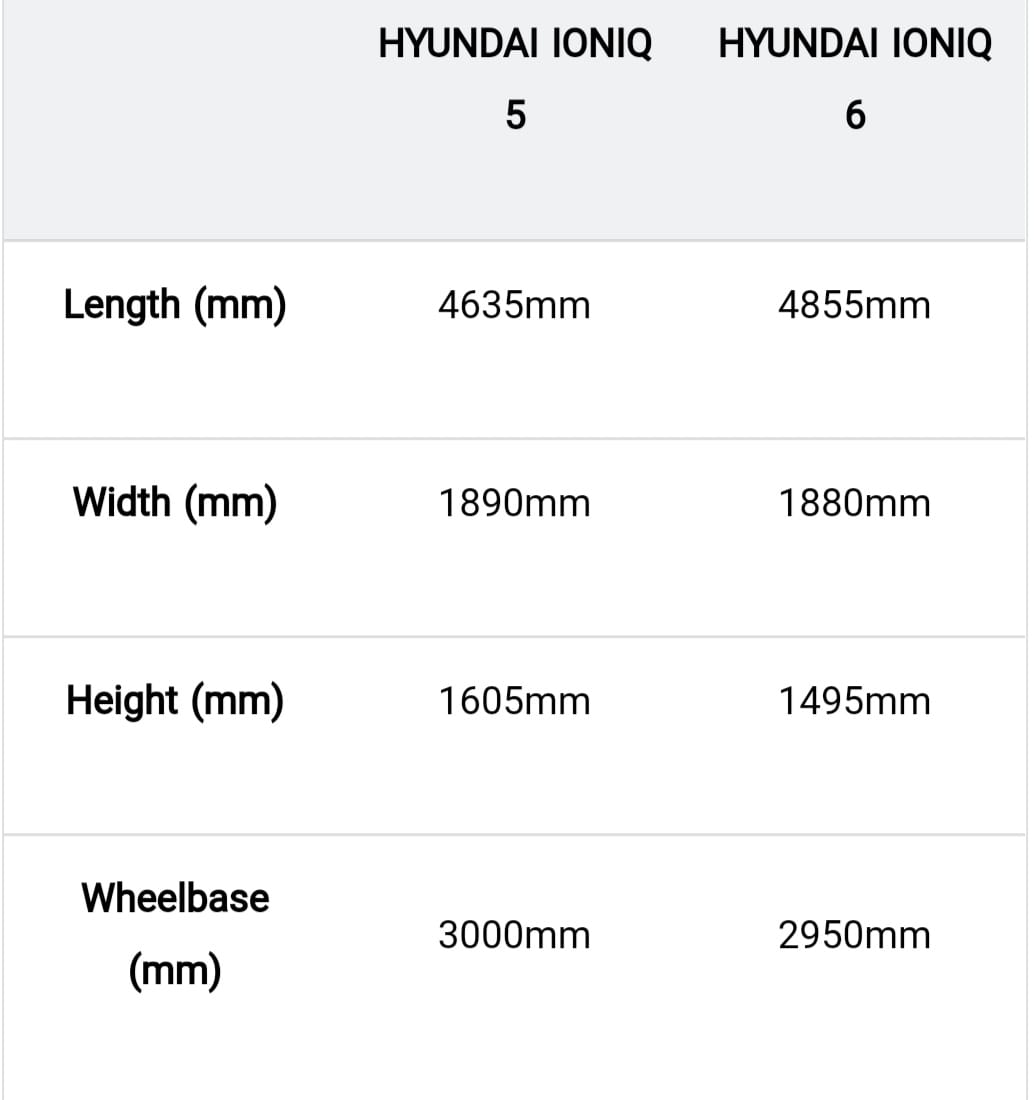
loniq 6 Specifications

The loniq 6 gets a 77.4kWh battery pack teamed with two electric motor options: a single rear wheel drive motor with specifications currently unavailable,a dual motor is set for producing 325PS and 650m.In max version, the dual motor would help to sprint from 0-100kmph in just 5.1 seconds.
For people who are comfortable with a smaller 53kWh battery which can be also used.This helps to couple with the rear wheel drive motor option, where Hyundai estimates it'll do under 14kWh per 100km according to WLTP.Like the loniq 5, the loniq 6 with support fast charging options as well as vehicle 2 load function allowing you to operate certain appliances with the help of the EV battery.
Hyundai's India EV Plans

In India,Hyundai is moving ahead to introduce the loniq 5 later this year and will probably be brought as a CKD offering.The car drafter is scaling up to introduce an India specific EV by 2025.
MG says that its electric SUV has been recieving more than 1000 bookings per month.

Electrical vehicles are starting to pick heat in the Indian market not only in the mass market segement models but also a step above it.The MG ZS electric SUV has achieved a key milestone by crossing 5000 sales since its launch in January 2020.

The highlight part of this milestone is the ZS EV's momentum on an upward trajectory as MG claims the SUV getting more than 1000 bookings per month recently.Back in March this year with a midlife refresh of ZS EV priced from 22 Lakh to 25.88 Lakh.The carmaker offers a great charging ecosystem including free of cost AC fast charger at residences/offices.It has a portable in-car charging cable,DC superfast charging stations at dealerships,24*7 charging facilities in 5 cities,and charging stations in satellite cities and tourist hubs.

The main party trick in the ZS EV is the electrical powertrain.It comprises 176PS electric motor,coupled up with the 50.3kWh battery pack offering a claimed range of 461km.In terms of charging capability, a 7.4kW does a 0-100 percent charge in 8.5 to 9 hours,whereas a 50kW fast charger can give 0-80 percent charge in just an hour.

The electrical SUV is continuing to have a tough competition with the Hyundai Kona Electric SUV in India.
Its a electrical hatchback with a drop top.

The Mini Cooper SE holds an important place in the carmakers history as being their first electric model.Recently they have planned to go for the topless version.This indicates that the revealation is Cooper SE Convertible.Its been the first and unique working model in the electric version to go topless.

The main hallmark normally of the Mini Cooper SE is its roof but in this case the roof is a disappearing one.

The Cooper SE convertible is pretty identical to its hard-top counterpart,with the likes of circular LED headlights,the mustache-like front grille surrounded with 17-inch alloy wheels,yellow accents in the OVRMs and the Union Jack tail lights are retained.Its even dimensionally identical to the hard-top cooper SE,measuring 3863mm long,1727mm wide,2495mm tall with a wheelbase of 2495mm.

It has a standard Cooper SE's 32.6kWh battery pack and 184PS electric motor.It manages to do the 0-100kmph sprint in 7.7- seconds compared to 7.3 seconds of standard model.It manages a WLTP-claimed 230km range on a single charge,just 3km less of the standard model's 233km range.

Here it is previewing what Mini could offer with the next-gen Cooper SE EV,expected to debut in 2023.In Indian Market,bookings for the hard top model have reopened for a batch of 40 units.Its now priced at Rs.50.90 lakh(ex-showroom),combined with new active safety features along with heated sports seats.
Its the lone all - electric Hyundai to get the hardcore 'N' branded treatment.

On the 'N' Day (July 15) the limelight for Hyundai was on the N22e and N Vision 74,two racy concepts portray their performance in a unique way by showcasing the Hyundai N's electric roadmap.The carmaker released a bombshell by stating the Ioniq 5 EV getting the perfomance transformed 'N' treatment making the competitors astonished with the move releasing in the 2023.

In the 'N' model we will firstly discuss on its performance factor.Since Hyundai hasnt revealed any specs yet, the Ioniq 6 based RN22e concept gives some clues as to what to expect.The conncept has a dual - motor AWD setup, making 585PS and 740Nm,coupled with 77.4kWh battery pack.For reference,the standard Ioniq 5's top-spec powertrain setup is a 306PS/605Nm dual motor AWD setup,coupled with a 72.6kWh battery pack.
Other than powertrain, the Ioniq 5 N could have torque vectoring,optimal power distribution,use 3D printed parts to save weight and come with better brakes to gain performance.Of course, all these gains could come at the cost of range,as the standard model offers a WLTP-claimed 470-480km on a single charge.

It seems to be a performance EV.Early spy shots of the performance EV fulfills those aspects.The overall profile looks largely similar to the standard model,where we noticed a lower ride hieght as well as sporty blacked - out alloy wheels wrapped in low profile tyres.
For India, the advanced model launch seems to be quite far away since the initial standard model which is Ioniq 5 is expected to arrive in second half of 2022.
Dear, I came across evautotalk.com and wanted to share this great free AI tool. With this tool you write content 10 times faster and with much higher conversion rates. You can use the tool for free via freeaiwriting.com The AI can write blogs,
Hello!
Add your site to 1000 business directories with one click here-> bit.ly/submit_site_23EGTc7oZMux
Add your site to 1000 business directories with one click here-> https://bit.ly/submit_site_9jxc1c6t8mpn
Submit your site to over 1000 advertising websites for free now bit.ly/submit_site_23EGTc7oZMux
From 'Moods' themes to proximity unlock and advance regen,the MoveOS 3 enhances S1 Pro by portraying it as a feature packed e-scooter.

Ola Electric has portrayed the OTA update on its MoveOS 3 by enhancing the features in its S1 Pro with some wonderful add-ons,
This update picturizes the following enhancements:
Hypercharging:
The EV maker conceptulizes the Hypercharger across the whole country network for faster chargin of e-scooter.Ola Electric claims through this concept one can add 50 kms in 15 minutes.
Three-Level regen braking:
With the MoveOS 3 into existance,users can shuffle between three levels of regenerative braking system which are - Low,Default and High. Low mode is better for chill rides whereas high modes are better for demanding riding conditions where there is especially a stop-go traffic.
Vacation Mode:
In this feature when we are holidaying, our Ola S1 Pro too could relax for around 200 days without the worry of deep discharge.This can be achieved by shutting down a bunch of background processes.
 Profiles, Proximity Lock/Unlock, Wifi
In the previous version MoveOS2, the biggest lapse was single user access to the escooter.With the recent update multiple users can have their settings handy accross the scooters.
Further to add on to thiss is the proximity lock/ unlock feature where you need not bother punching in the passw2ord or unlocking the e-scooter via the mobile application anymore.In the S1 Pro you would even have Wifi connectivity.
Moods:
This moods option was promised last year in the Ola S1 pros launch,while now it has been finally released in public.The three 'moods' - Bolt, Vintage and Eclipse - each have a customizable theme and even an 'exhaust' note.
 Party Mode:
It has speakers and now it can groove to the music with a light show too,which means the scooter syncs its lights with the music for proper light show.
Bluetooth Calling:
You can see call notifications on the dash,however, we still aren't sure if you can answer callss like Ather 450X.
Document Upload & Safety Lights:
Ola Electric has incorporated a feature to upload your liscence, Aadhar Number and other documents alog with accessing them through the console.
 They also claim there are a set of performance enhancements to the S1 Pro with this update.these include better acceleration in Hyper and Sport modes,increased top speed in Eco Mode,better visibility and increased accuracy in terms of vital scooter stats such as DTE(distance to empty), battery percentage and TTC(time-to-charge).
But the MoveOS 3 really offer enhanced riding experience and sport a seamless UI?Stay tuned for a detailed coverage on this update.
Having an electric power train in place of IC engine has allowed Hyundai to go nuts over EVs aesthetics.

The Hyundai loniq 5 has entered the Indian market and is soon proceeding for sales occupying the same segment as Kia EV6 and Volvo XC40 Recharge.But the loniq 5 feels like a oddball model compared to a fairly conventional Mini and Volvo EVs.Here loniq 5 takes the EVs interior to another level compared to the other EVs which are lined up in the race.
Here are the quirky 5 features and aspects of the loniq 5 EV:
Retro Styling: Hatchback or SUV?

Outside, the loniq 5 has a retro inspired aesthetic with boxy shape, sharp shoulder line crease and a long straight bonnet.It has 'Parametric Pixel LED' square headlights and multi LED taillights for added retro appeal.In some or the other way as in the rear 3 quarters, the design seems inspired by traditional 1980s hatchbacks such as the Lancia Delta Integrale.
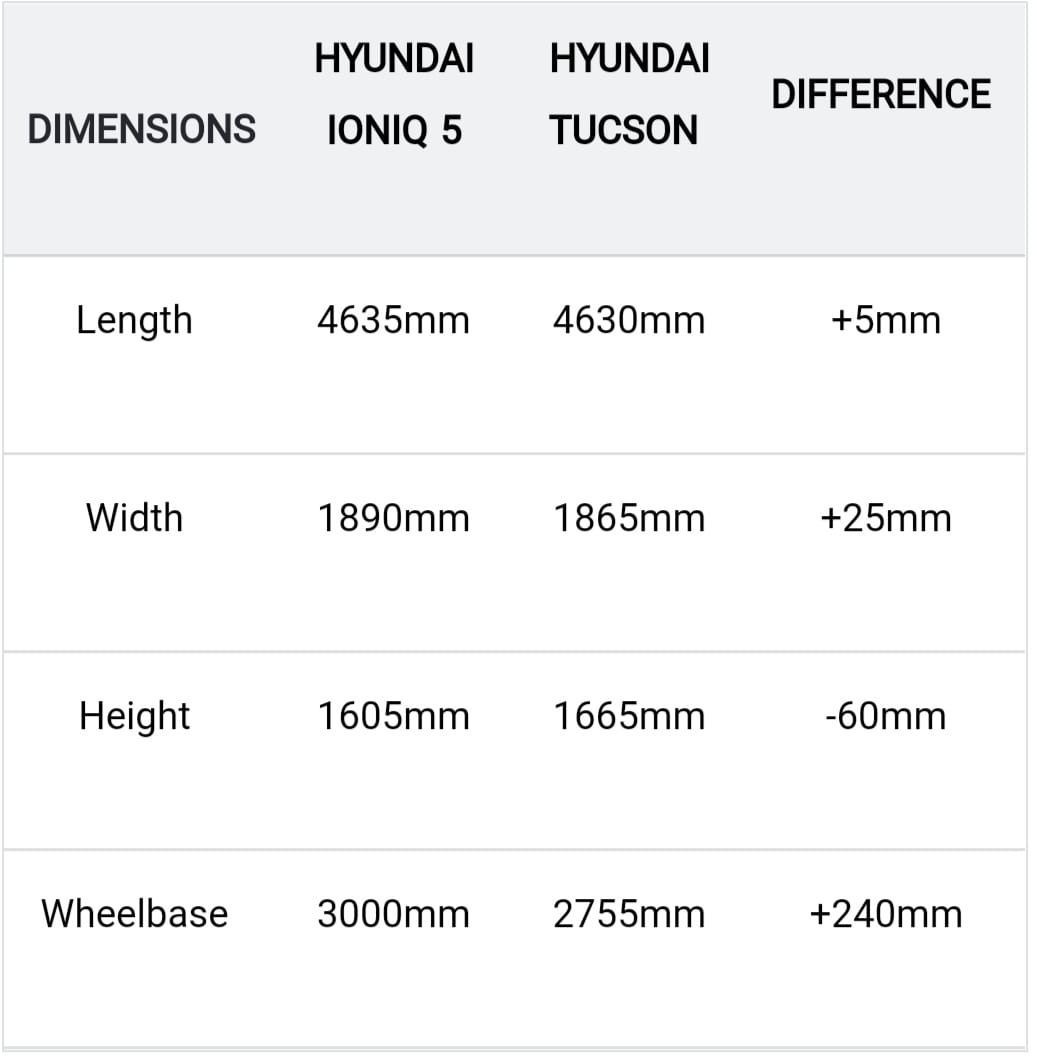 It may look like a hatchback in photos,but in real life,its longer and wider than the Hyundai Tucson! It also has a longer 3000 mm wheelbase,24 cm more than the mid-size ICE SUV.
Sliding centre console:
 loniq 5 has an airy cabin with light colored materials along with minimalistic design.The centre console slides forward and backward for flexibility,allowing us to move the entire unit with its cupholders,armrest and storage cubbies to make more room for rear centre passenger.For example, the rear bench seat has a power sliding function which can be adjusted to maximize the legroom at the back without compromising on front knee room.
Magnetic Pad that looks like a speaker:
 It has a floating panel along with dual displays for drivers instrumentation and infotainment.Next to the driver's screen there is a flat fabric-covered trim piece that looks like a speaker, but actually its a magnetic pad which is used to stick magnetic notes as reminders or a place to mount our phone.
Relaxation Seats:
 The loniq 5 'Relaxation front seats' which can be reclined using power controls.The front seats have a weird calf support,which we usually find in the rear seats which ultimately increases the comfort level.The seats are heated and ventilated which might come handy while waiting for your car to be charged in the charging station.The rear seats also offer a smaller degree of reclining capacity with a manual lever and memory function on all seats.
Ability to power external appliances:
 It has an option called V2L(vehicle-to-load),a coolest feature which allows us to power appliances and even charge your laptop or other EV's such as electric bikes using the car.It comes with an adapter which comes with a two-way external charging port for powering devices outside the car.For computers there is a three pin socket under the rear seat.
 We expect the Hyundai loniq EV 5 prices to be announced at Auto Expo 2023.Since its a locally assembled model the price woud be arounnd 50 Lakh (ex-showroom).
Hi there The New Powerful LED Flashlight is The Perfect Flashlight For Any Situation! The 3,000 Lumens & Adjustable Zoom gives you the wide field of view and brightness other flashlights don’t have. 50% OFF + Free Shipping! Get it Now: https:
Submit your site to over 1000 directories all with one click here> https://bit.ly/g5tig5
New Multifunction Waterproof Backpack The best ever SUPER Backpack: Drop-proof/Scratch-resistant/USB Charging/Large capacity storage 50% OFF for the next 24 Hours ONLY + FREE Worldwide Shipping for a LIMITED time Buy now: https://thebackpack.co
Get your site listed in 1000 business directories with just one click here-> http://bit.ly/3YBt5nF
New Multifunction Waterproof Backpack The best ever SUPER Backpack: Drop-proof/Scratch-resistant/USB Charging/Large capacity storage 50% OFF for the next 24 Hours ONLY + FREE Worldwide Shipping for a LIMITED time Buy now: https://thebackpack.co
This message was sent to you via your website contact form. I get literally dozens of leads this way every day from people like yourself responding to my message. Now I want to offer this service to you. I will generate leads for your business using this
Good day Defrost frozen foods in minutes safely and naturally with our THAW KINGâ„¢. 50% OFF for the next 24 Hours ONLY + FREE Worldwide Shipping for a LIMITED Buy now: https://thawking.co Cheers, Jeannie
*INFO SERVICE EXPIRATION FOR evautotalk.com Attention: Accounts Payable / Domain Owner / EV Auto Talk Your Domain: www.evautotalk.com Expected Reply before: Mar 21, 2023. This Notice for: www.evautotalk.com will expire on Mar 21, 2023.
Imagine having your message seen by millions of potential customers. With our service, we can send your ad text directly to website contact forms, guaranteeing that your message will be read. And the best part? There are no per click costs - just one flat
Morning, If you are one of the sufferers of the common problems nails have, then you are in luck! Our Toenail Clippers is here to help. It has a specially designed clip that can help those with troubles with winding nails, hard nails, two nails, nail c
We have hacked your website evautotalk.com and extracted your databases. This was due to the security holes you had in your your site/server which have gained us remote control of everything that was on the server. Our team is mostly interested in cus
*INFO SERVICE EXPIRATION FOR evautotalk.com Attention: Accounts Payable / Domain Owner / EV Auto Talk Your Domain: www.evautotalk.com Expected Reply before: Apr 26, 2023. This Notice for: www.evautotalk.com will expire on Apr 26, 2023.
Want to increase your visibility online and get more calls from potential customers? It all starts with your online reputation. Let me teach you how to generate more genuine 5-star reviews that will help you stand out in your industry. Visit: www.rankfas
Hi, How would you like to have a Most Advanced Ai assistant that can help you create 4K HD high-quality Video, graphics, and respond like a human? Well, your wish has come true! Introducing… Ai Diffusion - The world’s Ai App Create .. Ul
New Multifunction Waterproof Backpack The best ever SUPER Backpack: Drop-proof/Scratch-resistant/USB Charging/Large capacity storage 50% OFF for the next 24 Hours ONLY + FREE Worldwide Shipping for a LIMITED time Buy now: https://thebackpack.co
Hi, Take back your time—increase conversions by an average of 14x. That’s what This AI can do for your Business or agency. This Revolutionary AI is a highly trained Artificial Intelligence that: - Generates your creatives - Uses prove
Hello there Defrost frozen foods in minutes safely and naturally with our THAW KINGâ„¢. 50% OFF for the next 24 Hours ONLY + FREE Worldwide Shipping for a LIMITED Buy now: https://thawking.co To your success, Avery
Hey there, If you are one of the sufferers of the common problems nails have, then you are in luck! Our Toenail Clippers is here to help. It has a specially designed clip that can help those with troubles with winding nails, hard nails, two nails, nail
Is this your website? evautotalk.com? I just sent you a message via the contact form on your site and was wondering if you wanted to try some unique advertising that reaches business owners worldwide? How do we do it? Well you just witnessed our process.
Get SEO services to drive organic traffic and boost your online visibility in major search engines. Increase your revenue with our proven strategies and experienced team. We provide backlinks with DA PA only manually. Report every 10 Days in Exe
Good Morning The New Powerful LED Flashlight is The Perfect Flashlight For Any Situation! The 3,000 Lumens & Adjustable Zoom gives you the wide field of view and brightness other flashlights don’t have. 50% OFF + Free Shipping! Get it Now: ht
Is this your website? evautotalk.com? I just sent you a message via the contact form on your site and was wondering if you wanted to try some unique advertising that reaches business owners worldwide? How do we do it? Well you just witnessed our process.
Is this your website? evautotalk.com? I just sent you a message via the contact form on your site and was wondering if you wanted to try some unique advertising that reaches business owners worldwide? How do we do it? Well you just witnessed our process.
Hey there, If you are one of the sufferers of the common problems nails have, then you are in luck! Our Toenail Clippers is here to help. It has a specially designed clip that can help those with troubles with winding nails, hard nails, two nails, nail
Hi there, Monthly Seo Services - Professional/ Affordable Seo Services Hire the leading seo marketing company and get your website ranked on search engines. Are you looking to rank your website on search engines? Contact us now to get started - https:/
í ¼í¾·í ¼í¾§ Attention music lovers! í ¼í¾§í ¼í¾· Wow, All the best Sax Summer music !!! í ¼í¾µ Spotify: https://open.spotify.com/artist/6ShcdIT7rPVVaFEpgZQbUk í ¼í¾µ Apple Music: https://music.apple.com/fr/artist/jimmy-sax-black/1530501936 í ¼í¾
Accidental overdose is the #1 cause of death for people aged 18-45 in the United States. Narcan is a nasal spray that can reverse an opioid overdose, saving the person’s life. Our group of volunteers has compiled a website that tracks organizat
Hello, I was looking at your site and wanted to ask if you would be interested in getting one-hundred thousand emails sent out within 48 hours for just $48 - we call it our 48-Special. I’m with HiveMailers, we use a robust email system to get c
Hi there, Monthly Seo Services - Professional/ Affordable Seo Services Hire the leading seo marketing company and get your website ranked on search engines. Are you looking to rank your website on search engines? Contact us now to get started - https://
Hello, awesome site. You can benefit from using modern presentations at http://presentervisuals.com and increase your revenue on video platforms in 2023.
TimeSuite is the most advanced Construction and Project ERP ever produced. Advanced because it’s simplistic, comprehensive and dynamic. The system conforms to your needs. Advanced because it’s a single system (no modules). Web, desktop and mo
Hey Defrost frozen foods in minutes safely and naturally with our THAW KINGâ„¢. 50% OFF for the next 24 Hours ONLY + FREE Worldwide Shipping for a LIMITED time. Buy now: https://thawking.co Best Wishes, Karol
To the evautotalk.com Webmaster. I am Sherita, and for just a second, imagine this… - A person does a search and lands at evautotalk.com. - They linger for a moment to explore. “I’m interested… but… perhaps…†- And then they click
Hello, I was looking at your site and wanted to ask if you would be interested in getting one-hundred thousand emails sent out within 48 hours for just $48 - we call it our 48-Special. I’m with HiveMailers, we use a robust email system to get c
Hello, I was looking at your site and wanted to ask if you would be interested in getting one-hundred thousand emails sent out within 48 hours for just $48 - we call it our 48-Special. I’m with HiveMailers, we use a robust email system to get c
I just left you this message on your website contact form at evautotalk.com and I have also sent it to millions of other sites. I get new customers every day using this method and so can you! For just under a hundred bucks you can reach 1 million websites
New Multifunction Waterproof Backpack The best ever SUPER Backpack: Drop-proof/Scratch-resistant/USB Charging/Large capacity storage 50% OFF for the next 24 Hours ONLY + FREE Worldwide Shipping for a LIMITED time Buy now: https://thebackpack.co
Hi there! Top Rated SEO Agency. Personalized Service from Dedicated Account Team. ROI Driven. Relationship Focused. Custom SEO Strategy. 95% Client Retention Rate. Services: Analytics, Back-end Development, Competitive Research, Consulting. Buy now: htt
Hello, I was looking at your site and wanted to ask if you would be interested in getting one-hundred thousand emails sent out within 48 hours for just $48 - we call it our 48-Special. I’m with HiveMailers, we use a robust email system to get c
Hey :) If you ever need a break to de-stress check out https://cheekycam.com
Get Google Reviews for your business reputation. If you are interested reply to this message or at webscraftservices@gmail.com It’s very important for your business. Because customers first time see your reviews and make a decision about your bu
Hi there! Top Rated SEO Agency. Personalized Service from Dedicated Account Team. ROI Driven. Relationship Focused. Custom SEO Strategy. 95% Client Retention Rate. Services: Analytics, Back-end Development, Competitive Research, Consulting. Buy now: htt
Hello, I was looking at your site and wanted to ask if you would be interested in getting two-hundred and fifty thousand (250,000) emails sent out within 48 hours for just $48 - we call it our 48-Special. I’m with HiveMailers, we use a robust e
Hello, I work for Elebands. We make ultra-thin, fashionable, all day wearable body weight bands that you put on your wrist, ankle & waist all day to burn up to 1,500 calories, and the best part is, we have bands for sports, casual and formal, so yo
Hello, I was on your site today and I wanted to see if you would be open to getting a FREE 7-Day trial of our AI Agents, like ChatGPT, but much better. Plus, our plans start as low as $10 per month if you decide to continue. Our AI Agents Can:
Hey, for amazing spiritual and business insights visit https://psychicvip.com - Their accurate mediums reveal astonishing visions to help you plan & grow.
Hello, I was looking at your site and wanted to ask if you would be interested in getting two-hundred and fifty thousand (250,000) emails sent out within 48 hours for just $48 - we call it our 48-Special. I’m with HiveMailers, we use a robust e
Hello Again, I sent a message a few days ago but I’m not sure if you received it so I figured I would do a quick follow up with you again. I was on your site today and I wanted to see if you would be open to getting a FREE 7-Day trial of our AI Ag
Hello again, I sent a message a few days ago but I’m not sure if you received it so I figured I would do a quick follow up. I am Teresa with Elebands, we make ultra-thin, fashionable, all day wearable body weight bands that you put on your wrist,
I have 100% fully verified website contact forms for sale. Do your own blasts - save money! Quantity Price ===================== 500,000 $50 1 Million $99 5 Million $199 10 Million $299 20 Million $499 Credit card payment accepted, download l
Advantages of hiring a Developer: Specialized Expertise Tailored Customization and Control Time and Cost Efficiency Custom Plugin Development SEO Optimization Ongoing Support and Maintenance Seamless Integration and Migration Scalability for Bus
I have a huge list of people who are interested in working with you but I need a message to send them, do you have any ideas? When the leads come in would you be willing to work on a referral basis anytime you make a sale?
Hi - I’m David with HaroPress, running an agency that helps people obtain press placement via ‘Help A Reporter Out (HARO),’ Featured, and more. HARO is great for building your personal or company’s brand, and we’ve been able to experts like
I now offer contact form blasting service. With my DFY service you can either do a targeted blast to only websites that match your criteria or bulk blast large volumes of sites worldwide. Prices start at just $50 to reach 500,000 bulk sites. Contact me at
Hey, there! My name is Wil and I have a MASSIVE list of leads that are interested in buying from you. Is this a good place to to send you more information about the leads? Let me know.
Greetings from Apixelofhope.com! We specialize in giving sites like http://evautotalk.com an edge with premium SEO and content. Visit us for a peek at how we can collaborate to achieve your goals!
I now offer contact form blasting service. With my DFY service you can either do a targeted blast to only websites that match your criteria or bulk blast large volumes of sites worldwide. Prices start at just $50 to reach 500,000 bulk sites. Contact me at
AI is here to change the world, and people are going crazy over it So the question is, would you like a piece of that pie? BrainBox - The World’s First AI App Let You Launch Your Own “ChatGPT-like†AI Chatbot with 50 stunning AI features
Resurge has been a total health reboot for me, waking up feeling more refreshed than ever: https://www.socialsurge.ai/recommends/resurge/
Why choose Our ongoing monthly SEO services? SEO is a great addition to your digital marketing plan if you want to help your business reach more valuable traffic and earn new leads. By investing in monthly SEO services, you’ll continue to optimize
Hi, If I could generate leads on a performance basis for you, would you be interested in speaking? Best regards, Marcus Wenander Co-founder @ Quality Leads marcus@quality-leads.com www.quality-leads.com P.S. We recently helped seodr. (SEO A
Uncover a Wild $61 Per Hour with Zero Effort... Generating Over $1,300+ Daily! Zero Paid Ads | No Startup Required | Instant Results https://bit.ly/3tLo7uo
This is seriously perfect for you bit.ly/3tSF9GN
Discover the Revolutionary "60-Second Side Hustle"! Unlock a staggering income of $61 per hour without lifting a finger... Experience the thrill of earning more than $1,300 daily! This groundbreaking method requires ZERO paid advertising, NO initial inves
Discover how to effortlessly generate over $1,300 daily with the revolutionary "60 Second Side Hustle" – without paid ads, startup costs, or delays. https://bit.ly/3NWIxat
Escape the Get-Rich-Quick Schemes: "Tired of empty promises and costly programs? This is your opportunity to access a genuine, proven system that delivers real results, without hidden fees or catches." Absolute game changer. See more here https://www.savo
Hey, I’ll get right to it. I can get you on 3 podcasts/mo, and get you 15 professionally edited short form videos for social media (from the podcast interview), and then get you featured in 3 online publications/mo all done for you. We’ve helped
I saw something wrong with your Google Map listing, is this a good place to send a report of the issues I found?
7 page static website/ Contact form/ Slider - starts from $80 Unlimited categories/ products/ Slider/ Contact form/ Payment gateway integration/ Ecommerce website - stats from $300 All websites are mobile responsive and SEO friendly. Professional and
Hi, I noticed a few problems affecting your website on Google, is this a good place to send them?
Get Google, Trustpilot, Facebook etc All Reviews for your business reputation. Check https://webstraffics.com/order/reviewservice.php It’s very important for your business. Because customers first time see your reviews and make a decision about
Hey, I made you a free marketing video for your website, is this a good place to send it?
Hi, I noticed a few things wrong with your Google listing, is this a good place to send the problems?
Hey, Getting right to it, I can get your clients booked with leads already searching for the solution they offer. Facebook has published a public case study on us and we have partnered with over 1,000 agencies to service 30,000 businesses. We han
I saw that your google my business listing is not working as it should. Like where google show customers your business. I can give you a list of a couple things to fix, is that ok?
Affordable Website Design with High Quality. Receive a complimentary quote for Free Web Designing, including a 5-page website with Free Flash, Contact Forms, and a basic Logo, all backed by our satisfaction guarantee. Enjoy UNLIMITED revisions for the pro
Hi, My name is Gerald. If we could show you a way to save thousands of dollars a year on your FICA taxes, plus add benefits and increase salary to your W2 employees (at no out of pocket cost)...would you be interested? If so, you can check your eligibi
Ever thought of running a successful business in just 30 minutes a day? This book shows you how. Email marketing can be your secret weapon. [Find out more](https://bit.ly/48K97Mr) I am confident that this app is gonna be priceless for evautotalk.com
We will create a custom website design tailored to your specific business needs, which are of the highest quality at affordable prices. FREE BASIC MOCK-UP DESIGN BEFORE WORK JUST MESSAGE ME Just Reply to this message or email us webscrafts@gmail.com
Dreaming of buying a Lambo? AI Commissions 2024 might be your ticket! Learn to profit big with AI. See how at https://www.socialsurge.ai/recommends/buy-lambos-with-ai-2024/ Stay awesome in the online sphere at evautotalk.com! - Ernest
GAMIFY your videos and get viewers to happily give you their email and phone number. There is no other tech like this..it’s the next big thing. As seen on CBS, NBC, FOX, and ABC. See if you qualify for a free GAMIFICATION of your video. Contact m
AI Commissions 2024 is your key to an AI-driven cash flow. Grab your chance to earn big. Explore now at https://www.socialsurge.ai/recommends/ai-cash-machine-2024/ Continue making waves in the digital universe at evautotalk.com! - Mamie
Professional Web Designers - For Hire Need a Website Built For Your Business? Get an Experienced Dedicated Designer From Us. Our website development services can create your dream website. We design engaging and user-friendly websites that improve the
Are you looking for a dream home in a land of luxury and opportunity? Discover the best Overseas real estate deals in the Arab Emirates, where you can buy directly from the developer and save! Enjoy stunning views, world-class amenities, and tax-free livi
Want to skyrocket your brand? TV is the best way to do that! Not only can we get you on NBC, CBS, ABC, Fox, etc... But we can also get published on over 130 sites like Yahoo. We GUARANTEE that we will get your business on one of the major T
Hello, I noticed mistakes in your Google listing. Can I contact you to fix them?
Hi, I found some issues with your Google listing. Can we talk about them here?
Just checked out your site. Are you guys already using AI in your business? Would you be open to getting a FREE 7-Day trial of our AI Agents, like ChatGPT, but much better? In fact, we have close to 10,000 AI agents skilled in hundreds of industries,
Can I send you something to help your website use AI?
If you hire a wordpress developer in your country, they will charge you in two ways 1. Project basis 2. Hourly Basis Project basis - the minimum rate for a ecommerce website starts $1000, But if you hire us, You can save more than 65% Hourly basi
Ready to transform your financial future? Introducing https://linke.to/HighLevelAchievers – the key to unlocking unlimited online income. Our proven strategies provide step-by-step guidance, ensuring you navigate the digital landscape with confidence.
Want to skyrocket your brand? TV is the best way to do that! Not only can we get you on NBC, CBS, ABC, Fox, etc... But we can also get published on over 130 sites like Yahoo. We GUARANTEE that we will get your business on one of the major T
Did you see that your website is having performance issues?
Your Google setup seems incorrect; let me know if you want me to explain the issue.
Dear Sir, We provide country targeted website visitors and social media services. Website Traffic, SEO Services, Backlinks, Google Reviews, Classified ADS, Social Followers etc If you are interested then please visit our website. https://webstra
Hey, I’ll get right to it. I can get you on 3 podcasts/mo, and get you 15 professionally edited short form videos for social media (from the podcast interview), and then get you featured in 3 online publications/mo all done for you. We’ve helped
Hi, I teach businesses like yours on getting new clients. When do you have time for a call this week?
Have you noticed that your website is running slowly?
May I send you something to enhance your website with AI?
Hi Guys, Have you heard or seen what Kevin and his team are doing for business owners? Kevin has come to our rescue!! Kevin has unleashed the Self-Employed Mortgage & Business Loans Program, where NO Tax Returns, W2s, or 1099s are required. You can
How much money are missed calls costing you? Our Missed Call Text-Back service instantly engages your missed calls with personalized text messages, turning potential losses into engaged customers. Try it now and see the difference for yours
Do you want to grow your business and get more customers by using expert lead generation services?
We will create a custom website design tailored to your specific business needs, which are of the highest quality at affordable prices. FREE BASIC MOCK-UP DESIGN BEFORE WORK Contact us at https://websdesign.co/ Services Offered by us :- 1.
Missed calls mean missed opportunities. Discover Missed Call Text-Back, the service that transforms your missed calls into sales by automatically texting your callers, ensuring you never miss a lead. See how it works and its cost-effective ben
It’s time to create VIRAL content through our POWERFUL AI tool! Shinefy creates VIRAL content for you in SECONDS! Visit https://deidre--chasereiner.thrivecart.com/yearly-shinefy-subscription/ now!
Daily 7-second ritual activates the billionaire brain wave You may have already read or listened to the book “Think and grow richâ€â€¦ But the leaked CIA research reveals a powerful sound wave… When heard for 7 mins every day… Start att
Hi, I made a free video for your business. May I ask if this is the best place to send it?
Elevate your business on Google, Facebook, and Yelp effortlessly with our automated 5-star review service. Tailored for entrepreneurs eager for more visibility and free leads, our platform streamlines the process of gathering genuine revie
Hi, I noticed a few problems affecting your website on Google, is this a good place to send them?
Hi evautotalk.com, Your website evautotalk.com has only been registered in 8 out of 2500 directories. We are here to assist you gain online visibility this coming 2024. We at companyregistar.org are here to help you get your site listed in over 2,5
Hey, This Feb I’ll get you on 3 podcasts/mo + 15 professionally edited short-form videos for social media (from the podcasts) + 3 features in online publications/mo - done for you. We’ve helped 37 clients do just that to build their thought lead
GAMIFY your videos and get viewers to happily give you their email and phone number. There is no other tech like this..it’s the next big thing. As seen on CBS, NBC, FOX, and ABC. See if you qualify for a free GAMIFICATION of your video. Contact m
Here are the Business-Boosting Benefits of SEO 1: Brings Organic Search Traffic to your Website 2: Generates Leads Cost-Effectively 3: Increases Brand Awareness 4: Gets You Ahead of the Competition 5: Gets More Foot Falls in your Physical Sto
Can you tell me where or to whom I should send the interested leads I have for you?
Get Our Turbo Charged Link Building Plan: https://alwaysdigital.co/lgt/ 1. Brand Awareness 2. Recurring Income 3. Builds Credibility 4. Boosts Online Visibility 5. Opens Better Revenue Opportunities 6. Increase Your Website Traffic 7. Raises Your
Are you aware of the performance issues with your website?
Hello, have you noticed that there are performance issues with your website?
Are you okay running your business without much funds? This could slow down growth and delay returns on your business. Now you have the Opportunity to Fund your Busineses and Projects without stress and without the burden of repayment as our interest i
Missed calls = Lost revenue. í ½í²¸ With Missed Call Text-Back, we make every ring count. Stop the loss. Start earning more now: https://the-missed-call.com/freedom Best regards, Eileen 116 Agnes Rd, Ste
Hello, I created an awesome (A.I.) video for your business. Can I send it to you? Thanks!
Hi, If you need business financing fast, our fintech solution (2,000 Trust Pilot 5-Star reviews), analyzes the top 75+ lenders to find the perfect loan for YOUR business. Your personal concierge will generate three offers based on your needs with fast
Hey, This March I’ll place you on 3 podcasts/mo + 15 professionally edited short-form videos for social media (from the podcasts) + 3 features in online publications/mo - DFY. We’ve helped 41 clients do just that to build their thought leadersh
With the big man in the White House experiencing his own “Senior Momentsâ€, why not prevent this from happening to you by boosting the “Power Cells†in your brain by up to 60.2% This 1-word dementia test will see how mentally sharp you are. And l
Struggling to Rank your Website In Google? Imagine your website buried in search results, missing out on valuable leads and potential customers. Propel Your Business to New Heights with Monthly SEO! Top Rankings, Increased Traffic, Business Growth and
Hey there, Want your business showcased in Google News? Our hyper-targeted content gets distributed across Google News and similar platforms, bringing you increased exposure, calls, and clients. Reply with "YES" to learn more. Best regards, P
Hi, Protect your business from all types of Fraud with the FraudSafe Starter Kit Designed by qualified and certified professionals, the FraudSafe Starter Kit offers over 200 pages of key info about how to protect your business. Visit: https://g
Turn your 5 star reviews into videos that rank super high when people Google your reputation. Pay nothing for the video! http://reviewstovids.info
Are you looking for social media partners? drawiki.com@gmail.com
DEADLINE to claim your tax credit: April 15, 2024 • Our company is in Arizona andwill help you claim it; up to $32,220. • There are NO fees unless we get you your check from the IRS. Don’t miss your COVID tax credit: Call Kerry at 480-790-91
Have you considered how much your business will sell for? At Hedgestone.com we help business owners sell there company. If you would like to discuss your options and valuation, feel free to book a call. https://calendly.com/hedgestone/business-me
hello, for excellent direct marketing visit data-bank.co. We have special deals including targeted niche email data and much more. We look forward to helping you grow your brand this year.
Your website is broken, are you still in business? Devon
Beauty Be Me - Where Quality Meets Affordability. At Beauty Be Me, our mission is to provide high-quality cosmetic supplies at affordable prices. We believe that beauty should be accessible to everyone, and we’re here to make that happen. With a wid
Are you okay running your business without much funds? This could slow down growth and delay returns on your business. Now you have the Opportunity to Fund your Busineses and Projects without stress and without the burden of repayment as our interest i
May I purchase your Instagram account and your Facebook page? Please let me know here https://sellyourfbpage.com/
Can I purchase your Facebook page? Also can I purchase your Instagram page? If yes to either or both can you give me a bit more info here https://sellyourfbpage.com/
Interested in acquiring your Facebook page and Instagram. Are you interested in selling it? If so I just need a little info here please https://sellyourfbpage.com/
May I buy either your Facebook page or your Instagram account or both? Please tell me here https://sellyourfbpage.com/
Curious if you would be willing the part with your Facebook page or your instagram account or both? If so can you give me a bit more info here please https://sellyourfbpage.com/
Hello, We noticed your domain: evautotalk.com is listed in very few directories. Directories have a very high Page Rank Score and provide really good back links Company visit us on Company Registar and list your domain in all the directories.
Hi. I saw your website, can i send you a video about your business?
Hi, Do you have a digital product you would like to see? Do you target companies? We promote your product for you on a commission basis. Come check us out: https://evautotalk.leadsboy.biz
Advantages of hiring a Developer: Specialized Expertise Tailored Customization and Control Time and Cost Efficiency Custom Plugin Development SEO Optimization Ongoing Support and Maintenance Seamless Integration and Migration Scalability for Bus
Curious if you would be willing the part with your Facebook page or your instagram account or both? If so can you give me a bit more info here please https://sellyourfbpage.com/
Curious if you would be willing the part with your Facebook page or your instagram account or both? If so can you give me a bit more info here please https://sellyourfbpage.com/
Can I purchase your Facebook page? Also can I purchase your Instagram page? If yes to either or both can you give me a bit more info here https://sellyourfbpage.com/
May I buy either your Facebook page or your Instagram account or both? Please tell me here https://sellyourfbpage.com/
Hi, Do you have a digital product you would like to see promoted for free? Do you target companies with your product? We promote your product for you on a commission basis. Come check us out: https://evautotalk.leadsboy.biz
Do not stay out of business, or close down due to lack of Funding and finance. Your projects, businesses and financial needs is completely possible. You can now fund your projects, businesses without worries of repayment as you can have ample amount of
Hello, I wanted to ask if you ever struggled with the choice of working out OR putting in more time at the office. Well, we have the perfect solution for you - EleBands! EleBands offers ultra-thin, fashionable all day wearable body weight bands t
Hi evautotalk.com We noticed your website evautotalk.com is only listed in 9/2,500 directories. We have a service that lists your company in all the directories globally. It supports all countries, all services, to boost your SEO and get you thos
Hey, would you like to get some Bitc0in.. Without actually paying for it? Sound like an impossible task to pull off? Well I’m here to tell you that this is NOT the case =>> Go here to see the secret for getting Bitc0in & Ethereum =>> http
Hi, Are you looking for someone who can follow your complex business SOPs and work on them accordingly? I specialize in Back-office work and I can help you in the following ways: 1. Data Management Services: Data Entry, Data Processing, Data Cle
Hey there, Imagine your WordPress site powered by AI! Our plugin writes captivating content, designs stunning visuals, and automates marketing tasks - all within your Wordpress dashboard. More info: https://furtherinfo.org/wpg Sincerely, C
Hi there, We run a Youtube growth service, where we can increase your subscriber count safely and practically. - Guaranteed: We guarantee to gain you 700-1500 new subscribers each month. - Real, human subscribers who subscribe because they are int
Hey there, If you are one of the sufferers of the common problems nails have, then you are in luck! Our Toenail Clippers is here to help. It has a specially designed clip that can help those with troubles with winding nails, hard nails, two nails, nail
Are you looking for a personal assistant who can handle your daily business operations and make your life easier? I can help with tasks related to admin, marketing, answering emails, website management, social media, content creation, planning new project
Do you need any help with tasks related to Google sheets and Microsoft Excel? I can work on Creating Dashboards in excel sheets, Business Automation, Creating reports, graphs, fetching data from multiple sources, Data Spreadsheet formulations, Data Setup,
Would you like to burn 750-1500 calories a day without having to work out? If yes, we have a solution, and if you order today, you will Get One FREE! We created the first ever, luxury, all-day-wearable weight bands that goes on your wrist, ankles, & wa
A local store or a multinational chain, we build mobile Apps at crazy prices. We convert your website into an App. Android ($50) iOS ($50) Get your free consultation here: https://forms.gle/hbayvMrG3N7u2Rbu9
Hi, This is crazy, we are building mobile Apps for $50. Get your iOS and Android App! Why are we doing this? Well, we are building a lot for cheap. Visit us PCXLeads.com
Hi there, We run a Youtube growth service, where we can increase your subscriber count safely and practically. - Guaranteed: We guarantee to gain you 700-1500 new subscribers each month. - Real, human subscribers who subscribe because they are int
I want to get this done for you: https://warriorplus.com/o2/a/dj12wf0/0
We made this so you can just copy and paste it: https://warriorplus.com/o2/a/dj12wf0/0
Hi The New Powerful LED Flashlight is The Perfect Flashlight For Any Situation! The 3,000 Lumens & Adjustable Zoom gives you the wide field of view and brightness other flashlights don’t have. 50% OFF + Free Shipping! Get it Now: https://lint
Are you looking for a content writer or copywriter who can write according to your ideas, follow your specific tone and style, and keep your audience in mind? I specialize in crafting content that is easy to read and consistent from start to finish. I cur
Discover how GoHighLevel can streamline your operations and boost your client engagement effortlessly. Join thousands of successful businesses that have transformed their workflows and achieved outstanding results with our all-in-one platform.
Hi, I noticed that there issue with your google maps is this the right place send that information just reply and let me know thanks, Molly 85 jefferson street new york reply unsubcribe in subject line to opt out
Hi, I did a free marketing video for your website, is this a good place to send it? Please fill out your info here if so: https://freevideoservice.com/
Hi, I did a free report for your website, is this a good place to send it? Reply with, "yes" if so! :)
Work From Home With This...You Will Never Look Back $500+ per day, 100% Free Training, go here: ezwayto1000aday.com
Hello, Boost your social media presence with our collection of 35,000 engaging Reels. Crafted for attention and engagement, these Reels are perfect for all major platforms. Ready to elevate your social media game? Cliick here: https://thedigitalagen
Want Your Ad Everywhere? Reach Millions Instantly! For less than $100 I can blast your message to website contact forms globally. Contact me via skype or email below for info P. Stewart Email: hcj0x4@submitmaster.xyz Skype: form-blasting
Looking for a Great Job? 75% of resumes aren’t even seen by hiring managers! Is your resume keyword rich and ATS ready? Find out with our FREE consultation with a certified, trained resume writing. Send your resume to resumes@razoredgeres
Hi there, We run a Youtube growth service, where we can increase your subscriber count safely and practically. - Guaranteed: We guarantee to gain you 700-1500 new subscribers each month. - Real, human subscribers who subscribe because they are int
Want Free business data? Usage: https://leadsbox.biz?query=YourQuery (Lawyers in New york for example) 71 Million business records in 202 countries Updated Daily Company Name countryCode countryName state county city street postal
Hi there, What if you could send unlimited emails directly from evautotalk.com with a guaranteed 99.4% inbox delivery rate, for just a one-time fee? - Send unlimited emails to unlimited subscribers - Enjoy a guaranteed 99.4% inbox delivery rate -
Boost your business and get more customers with the cloud suite of AI image & marketing tools at https://proai.click
My name is Sam. I provide data entry services for just $1,000 USD per month (160 hours). If you prefer an hourly basis, the cost is $8 USD per hour. I can handle any computer-related task that is repetitive in nature, such as entering data into software,
Are you still looking at getting your website done/ completed? Contact e.solus@gmail.com
Hey, Do you need data for marketing purposes, seeking new employment, seeking suppliers or other companies to do business with? We have 25 million active companies across all 200 countries in an excel sheet available for you for $1 once off today.
Hi I see your online property is only listed in 9 out of 2459 directories This will severely impact your page rank, the higher amount of directories your company is listed in, locally or globally, the more back links you have and the higher you ran
Hi, This is Neil. I have more than 12 years of experience in content writing. I checked your website evautotalk.com, and I have extensive experience in your industry. I can help you with high-quality content for blogs, articles, and website content, a
Hi there, We run a Youtube growth service, where we can increase your subscriber count safely and practically. - Guaranteed: We guarantee to gain you 700-1500 new subscribers each month. - Real, human subscribers who subscribe because they are int
WANTED: Partnerships & Agents for Global E-commerce Firm 4U2 Inc., a premier E-commerce , Sourcing Brokerage firm, is actively seeking partnerships and collaboration with manufacturers and wholesalers for agricultural, commercial, and residential produ
Hello, It is with sad regret that after 12 years, LeadsMax.biz is shutting down. We have made all our databases available on our website. 25 Million companies 527 Million People LeadsMax.biz
Work From Home With This 100% FREE Training..., I Promise...You Will Never Look Back $500+ per day, TRUE -100% Free Training, go here: ezwayto1000aday.com
Hello, Securing the funding to drive growth and realize ideas is a major challenge for startups and established businesses alike. At Cateus Investment Company (CIC), we specialize in tailored financing solutions to meet these needs. We offer: Deb
Expand Your Reach: Want your ad to be seen by countless others just like this one? I can help you achieve that! Email me below to learn more about our services and start spreading your message effectively. Phil Stewart Email: 9etq5u@mail2go.xyz Skype
Hello, Boost your brand’s reach with AgencyFuse. Our digital marketing services are designed to help businesses launch impactful campaigns quickly. Best, Matthew Williams
Hello from LeadsMax.biz!! We are shutting down and have made all our data available for all the countries! Come check us out and search your business and consumer data for free LeadsMax.biz
Hi there, We run a YouTube growth service, which increases your number of subscribers both safely and practically. We go beyond just subscriber numbers. We focus on attracting viewers genuinely interested in your niche, leading to long-term engageme
Hi there! Are you looking to maximize the impact of your YouTube videos? Introducing YTCopyCat, our innovative SaaS tool that converts your YouTube videos into various high-quality written content using advanced AI. What Can Our Tool Do for You?
Tired of overpaying for simple web work and website updates? Why pay $50+ per hour for web development work, when you can get higher quality results AT LESS THAN HALF THE COST? We are a FULL SERVICE, USA managed web development agency with wholes
Dear evautotalk.com owner or manager, Cut your business or personal credit cards and loan payments in half. eliminate interest and reduce your debt by 50%. 100% guaranteed. The average customer saves $56,228 in unnecessary interest plus principal and
Are you still looking at getting your website done/ completed? Contact e.solus@gmail.com
Are you struggling to get your website updated to the way you need it ? Tired of paying $50+ per hour just for a few tweaks? We are a FULL SERVICE, USA managed web development agency with wholesale pricing. No job too big or small. Test us out to
Hello, My name is Arin Roy. I provide data entry services at USD 9/hour. I can work as per instructions and follow step-by-step instructions. If you are interested, Please share your requirements at bizassistance008@outlook.com and we can take a vid
Hi, Are you looking for a quick and hassle-free business loan? We offer a variety of options to suit your needs, including Expansion loans, startup loans, heavy equipment loans, home loans, real estate development loans, construction loans, working
Hello It is with sad regret to inform you that PCXLeads.com is shutting down We have made all our databases available to the public. Search your evautotalk.com, industry, phone numbers, emails, people.. 25 Million Companies globally 500 Mil
Hi there, We’re excited to introduce SoftSites, the easiest way to launch a professional, high-converting website in just minutes. With SoftSites, you can build and customize stunning websites without any technical skills, all while driving traffic a
Advantages of hiring a Developer: Specialized Expertise Tailored Customization and Control Time and Cost Efficiency Custom Plugin Development SEO Optimization Ongoing Support and Maintenance Seamless Integration and Migration Scalability for Bus
Hello, I’m Tanu, a HubSpot Certified copywriter and content writer, distinguished as one of the few globally certified in this field. With 8 years of experience, I excel in crafting compelling content across various formats, including blogs, articles, e
Hi evautotalk.com Owner, Struggling with Live Chat Issues? Slow response times and missed chats can create a stressful environment for your team and frustrate your customers. What If It Gets Worse? As these issues pile up, you risk damaging yo
Advantages of hiring a Developer: Specialized Expertise Tailored Customization and Control Time and Cost Efficiency Custom Plugin Development SEO Optimization Ongoing Support and Maintenance Seamless Integration and Migration Scalability for Bus
Hey, if you’re looking for something new and fun, check out Stake. It’s an online casino that gives you free cash every day just to play. Seriously, it’s a blast! Sign up with my link https://t.ly/socialcasino-137
Do you have big ideas and plans to update your website, but hate the outrageous fees that most agencies charge? Why pay $50+ per hour for web development work, when you can get higher quality results AT LESS THAN HALF THE COST? We are a FULL SERVIC
Stake has been my new go-to for some fun online. It’s a casino where you get free cash every day to play with, no strings attached. You’ve got to try it! Use my link https://t.ly/socialcasino-45 to sign up
Hi, Are you seeking a fast and reliable business loan to fuel your growth? At Fund Crowns Limited, we understand that every business is unique. That’s why we offer a diverse range of financing options tailored to meet your specific needs, includin
Hi there, We run a Youtube growth service, where we can increase your subscriber count safely and practically. - Guaranteed: We guarantee to gain you 700-1500 new subscribers each month. - Real, human subscribers who subscribe because they are int
Yo, you’ve got to check this out—Stake is an online casino that’s totally legit, and they give you free money every day to play with. It’s so much fun! Sign up with my link https://t.ly/socialcasino-32
Hi, would you like your ad to reach millions of contact forms just like this one did? Check out my site below for more details. http://gu58hq.contactuspagemarketing.xyz
Hey Not sure how much money evautotalk.com is making, but selling digital products is on fire. The transaction value in the Digital Commerce market is projected to reach US$7.63 trillion in 2024. (Statistica.) There is a simple 2-step method to
Still looking to get your WordPress website done, fixed, or completed? Reach out to us at e.solus@gmail.com & Prices starts @ $99!
Hello, Would you be interested in dropping up to 2 pounds a week without hitting the gym? Most people don’t believe this is possible, but it is, because it has been working for me and I never gain the weight back. I work for Elebands and we mak
New Multifunction Anti-theft Waterproof Sling Bag The best ever SUPER Sling Bag: Drop-proof/Anti-theft/Scratch-resistant/USB Charging 50% OFF for the next 24 Hours ONLY + FREE Worldwide Shipping for a LIMITED time Buy now: https://xbags.shop S
We are proud to present our latest product for business data Experience our searches on worldwide b2b data This offer is a comprehensive dataset of each country Which are all kept up to date on a monthly basis Try out the open search we offer
Are you concerned that your current website that was built a few years back,is no longer a good representation of your company ? Why pay $50+ per hour for web development work, when you can get higher quality results AT LESS THAN HALF THE COST? W
Are you still looking at getting your website done/ completed? Contact e.solus@gmail.com Struggling to rank on Google? Our SEO experts can help. Contact es.olus@gmail.com
Hi, Searching to enhance your online presence or business while avoiding straining your budget? Fiverr provides a wide range of options—everything from graphic design to web development, starting as low as $5! Whether you require a logo, website u
Good day Defrost frozen foods in minutes safely and naturally with our THAW KINGâ„¢. 50% OFF for the next 24 Hours ONLY + FREE Worldwide Shipping for a LIMITED time. Buy now: https://thawking.shop Best, Mazie
Unlock your business’s potential with our top-tier financial solutions. We offer customized business loan packages to meet your unique needs. Contact us today at info@financeworldwidehk.com to get started! Best regards, Laura Cha
New Multifunction Waterproof Backpack The best ever SUPER Backpack: Drop-proof/Scratch-resistant/USB Charging/Large capacity storage 50% OFF for the next 24 Hours ONLY + FREE Worldwide Shipping for a LIMITED time Buy now: https://thebackpack.onli
FINANCIAL INSTRUMENT AND GLOBAL FUNDING We at WEALTHY CREDIT LIMITED HONG KONG -For all your financial instruments -BG/SBLC/PPP ... Also monetization and NON RECOURSE cash loan 10% for any referrals and also Intermediaries/Consultants/Brokers can appl
Need a way to get millions of people to view your website economically? Contact me at the details below if you’d like to explore this further. Regards, Lieselotte Strutt Email: Lieselotte.Strutt@morebiz.my Website: http://ravcbm.contact-form-mar
Hi, We run a Facebook service, which increases your number of fans/followers safely and practically. This can be for a page, a group, or an individual profile. - 400+ followers per month. - Real people who follow your page/group/profile because
Need cost-effective lead generation? We specialize in sending messages directly through website contact forms, ensuring your message lands in the right inboxes. Start reaching 100M potential buyers today, all starting from just $19! Let’s amplify yo
Do you own and operate a business outside the USA? My name is Jeremy Allen from BNF Investments LLC, a Florida based Investment Company. We are expanding our operations outside the USA hence; we are actively looking for serious business owners operatin
Unlock Stress-Free Website Management—Just $25/Month Experience worry-free web hosting with our fully managed service designed to keep your website secure, fast, and always up-to-date. For only $25/month, we handle everything—WordPress core, PHP, p
My name is Addy, and I specialize in writing well-researched content tailored to meet the specific needs of your industry. I conduct thorough research using verified sources to ensure accuracy and reliability, incorporating elements like tables and statis
We understand that as a financial institution, you value reliable and trustworthy partners. At First Asia Finance International Limited, we offer the best financial solutions for companies, businesses and individuals seeking loans. We have a variety of
Hi again evautotalk.com Owner, We’re thrilled to announce the launch of the all-new Leader CRM, and as a valued user, you and your team are invited to enjoy a free one-month trial of our premium subscription—no credit card required. This latest
Are you looking for a personal assistant who can handle your daily business operations and make your life easier? I can help with tasks related to admin, marketing, gathering data from multiple websites, answering emails, website management, social media,
Want to get millions of people to share your content on a budget? Feel free to contact me using the details below if you want to learn more about my approach. Regards, Merlin Sparks Email: Merlin.Sparks@morebiz.my Website: http://gwzypa.form-marke
Hello, My name is Arin Shah. I provide data entry services starting at USD 6/hour. I can work as per instructions and follow step-by-step instructions. If you are interested, Please share your requirements at bizassistance008@outlook.com and we can ta
Hello I hope this message finds you well. My name is Mathew Lundgren, and I am a Research Assistant in the Research and Development Department at Newton Laboratories Pro Ltd, a leading biopharmaceutical company based in London, England. I am reaching o
Hi, are you looking to gather information from different websites or sources, like collecting email addresses, compiling competitor data, finding product reviews, gathering contact details of potential leads, collecting data on market trends, researching
Hi there Searching for a gift that will undeniably enchant? Our Enchanted Shining Rose™ combines beauty and magic in one stunning piece. With its soft glow and shimmering rose adorned with fairy lights, it’s an item that lights up any room—and a
Hello and thank you for reading my message. I am sorry to contact you in this way. My name is Johan Fourie I am a software developer that specializes in web related projects, I am a core developer. I specifically specialize in data management an
Are you still looking at getting your website done/ completed? Contact e.solus@gmail.com Struggling to rank on Google? Our SEO experts can help. Contact es.olus@gmail.com
Hi, This is Vana. I am a bookkeeper. I can categorize your transactions of incomes/expenses and can handle bank reconciliations. I can work on any software that you use for accounting. My rates are USD 10 per hour. Reply me on projectsexpert222@outloo
My name is James Broderick, and I am an attorney at Broderick & Associates LLP based in Canada. I am reaching out to discuss matters concerning your late relative payable on death. Please feel free to contact me at your earliest convenience at the emai
Are you looking to enhance your brand’s social media presence with engaging and consistent content? As a social media specialist, I offer custom posts for platforms like Facebook, Instagram, and LinkedIn, designed to boost engagement and connect with yo
Do you have a message you want to get read by millions of people at an affordable price? Let me know if you’d like more information—my contact info is listed below. Regards, Wallace Hammond Email: Wallace.Hammond@morebiz.my Website: http://92t
Is evautotalk.com not making the sales it should? Setup your Shopify store before black friday and: Be Your Own Boss, you WANT a BUSINESS, not a website only! The BEST VALUE for your money (+17000 happy clients) We provide you with LIFETIME SUP
Hey there! Looking for someone who can take text from images, PDFs, or files and organize it into Excel, Word, PPT, or a spreadsheet? I’ve got you covered! Just send over your requirements, and I’ll ensure everything is accurately entered and formatte
New Multifunction Waterproof Backpack The best ever SUPER Backpack: Drop-proof/Scratch-resistant/USB Charging/Large capacity storage 50% OFF for the next 24 Hours ONLY + FREE Worldwide Shipping for a LIMITED time Buy now: https://thebackpack.biz
Hello, Are you enhance your brand awareness, build trust, and gain exposure at no cost? We’re offering a free article on Benzinga, a site with over 14M+ monthly visitors—a perfect opportunity to boost your company’s visibility. This offer is l
Hi, this is a friendly reminder that this is the last chance for USA based businesses to file their claim to receive compensation from the Visa/Mastercard $5.5 Billion Dollar settlement. You could potentially receive tens of thousands, hundreds of thousan
Rick here from Container Speedy House Co., Ltd, we are the factory producing modular container houses from China. It is a pleasure to introduce you our container houses for office, accommodation, hotel, school and camping house etc. Please contact us
Was just browsing the site and was impressed the layout. Nicely design and great user experience. Just had to drop a message, have a great day! d7sda78sq
Hi there, We run a Youtube growth service, where we can increase your subscriber count safely and practically. - Guaranteed: We guarantee to gain you 700-1500 new subscribers each month. - Real, human subscribers who subscribe because they are int
Hi, I am a senior web developer, highly skilled and with 10+ years of collective web design and development experience, I work in one of the best web development company. My hourly rate is $8 My expertise includes: Website design - custom
Let Us Take a Few Things Off Your Plate (Plus Black Friday Savings) Unlike your current host, Best Website goes above and beyond to support your business by including valuable extras as part of our fully managed WordPress hosting service, such as daily
Want a smarter way to advertise? Contact form ads reach your audience directly without the restrictions of social media platforms. One flat rate, unlimited possibilities. Get in touch with me through the info provided below if you’d like to know mor
Hi, this is a friendly reminder that if your business accepted Visa/Mastercard between 2004 and 2019, you may be eligible to participate in the Visa/Mastercard class action settlement, which has set aside $5.54 Billion for businesses like yours. The deadl
Hi Mate, "Traffic down, rankings down, revenue down, business down." "Just as the new broad core update is rolling out, sales vanished while traffic is way up." "We are free falling." "Yes, looks like a drop. Ad revenue record low for Novembe
Hello there, Frustrated with chaotic meeting notes and incomplete follow-ups? With Fireflies ai, you’ll never miss an important detail again. Here’s what it does: Automatically records and generates transcripts of meetings. - Summarizes key
My name is James Broderick, and I am an attorney at Broderick & Associates LLP based in Canada. I am reaching out to discuss matters concerning your late relative payable on death sum of Eleven Million Eight Hundred Thousand, Twenty United States Dollars
Hello there, I hope this email finds you well. I wanted to let you know about our new BANGE backpacks and sling bags that just released. Bange is perfect for students, professionals and travelers. The backpacks and sling bags feature a built-in USB
Need financial services to take your business to the next level? DAC offers a range of flexible solutions designed with entrepreneurs in mind. í ½í±‰ Explore your options here: https://www.davidallencapital.com/kristi Because your business deserves th
Hi! Is your website not making the sales that it should? We build highly branded shopify stores. Be your own boss, you want a BUSINESS, not a website only! The best value for your money (17k happy clients) We provide you with lifetime sup
Hi Do you use Google Maps for finding companies / suppliers / clients? We grabbed all 25 million companies from google maps, including addresses, Industries, Phones, Emails, Websites, Lat/Long, many more.. Get it today for $4.99 https://b2bda
Are you struggling to reach your target audience? Let us help. We can blast your ad text to millions of website contact forms, ensuring that your message is seen by the right people. And with just one flat rate, you can reach a massive audience without wo
Transform Your Entire Tasks Using Merlin, the AI-Powered Chrome Extension for Productivity This tool acts as a all-in-one efficiency booster, built for time-saving, enhance your creative flow, and make your work easier effortlessly. Integrating advan
A remote job opportunity for a Law Firm, the role of a Payment/Deposit Handler. This position involves managing payments and deposits, ensuring accurate processing, and maintaining financial record. This position is only for candidates based in the US.
Are you still looking at getting your website done/ completed? Contact e.solus@gmail.com Struggling to rank on Google? Our SEO experts can help. Contact es.olus@gmail.com
We improve MOZ Domain authority 30+ in 15 Days its help to improve google rank, improve your website SEO, and you get traffic from google DA - 0 to 30 - (Only $29) - Yes, Limited time !! >> 100% Guarantee >> Improve Ranking >> White Hat Proces
Your website deserves the best—choose RealPPVTraffic for real, effective visitor growth that drives results. Don’t wait; take control today! Check it out today: http://realhumanwebtraffic.top
USA businesses: Did you process Visa/Mastercard payments from 2004 to 2019? If yes, you could be eligible for a portion of a $5.54 billion settlement. The filing deadline is February 4, 2025. Don’t leave money on the table! Visit http://cardsettlement
Want a mobile App for evautotalk.com for $15? Come join checkout our Christmas special and get your App now https://zundee.click/?affid=affiliateking&url=evautotalk.com
Hi there, We run a Youtube growth service, where we can increase your subscriber count safely and practically. - Guaranteed: We guarantee to gain you 700-1500 new subscribers each month. - Real, human subscribers who subscribe because they are int
Do you have a project you’ve been dreaming of completing for years? A book you want to write or publish? A business you’re ready to start or grow? Imagine having your own dedicated team to help you get it across the finish line. At WCD Marketing, we
Struggling to rank on Google? Our high-quality backlink services will push your site to the top. Trusted by businesses worldwide! Start now and watch your traffic soar! We Create 1200 Backlinks for you in Just $12 > Boost Google Ranking Get HIGH-Q
Transform your business reach with our ad-blasting service. For one flat rate, we send your message to millions of website contact forms. No per click costs - just pure results. Try it now! Reach out to me below if you want more details on how I make
Hi, I am a senior web developer, highly skilled and with 10+ years of collective web design and development experience, I work in one of the best web development company. My hourly rate is $8 My expertise includes: Website design - custom
Hi there, We’re excited to introduce Mintsuite, the ultimate platform to enhance your online presence and drive results. Mintsuite empowers you to create stunning websites, manage social media like a pro, and generate traffic effortlessly. Create
Hello I hope this message finds you well. My name is Mathew, and I am a Research Assistant in the Research and Development Department one of the leading biopharmaceutical company based in London, England. I am reaching out to explore a potential partne
My name is Addy, and I specialize in writing well-researched content tailored to meet the specific needs of your industry. I conduct thorough research using verified sources to ensure accuracy and reliability, incorporating elements like tables and statis
Hey from Zundee! Happy new year to you! We have made all our databases / client lists available to companies. Companies, People, Job Titles, Phones, Emails, you name it! Visit us: https://zundee.click
Make your marketing budget work harder. For a flat rate, we’ll send your ad text to millions of website contact forms. It’s cost-effective, reliable, and guarantees your message is read. Contact me at the details below if you’d like to explore t
Impact Explainers specializes in high-quality 2D/3D animation, CGI/VFX, and motion graphics. With a team of 60+ experts and cutting-edge technology, we deliver exceptional results and fast turnarounds. Use animation to enhance sales, marketing, business
Publishing bedtime adventures has never been simpler. Whether it’s bedtime stories or interactive adventures, you can do it all in minutes. See how it works—tap here! https://bit.ly/Kids-Story-Book
Hi, I help businesses boost their online presence with website optimization, engaging content, strategic social media, and high-quality blogs—starting at just $100 per month. Ping me at Youronlinepresence2@outlook.com to discuss it further.
Hi, Are you looking for someone who can follow your complex business SOPs and work on them accordingly? I specialize in Back-office work and I can help you in the following ways: 1. Data Management Services: Data Entry, Data Processing, Data Cleansing, D
Imagine creating professional-quality 8K films without a huge budget. Produce cinematic-level movies faster than ever. Start your journey today. https://bit.ly/ai-8k-realistic-movie-maker
Hi, This is Dana. I am a bookkeeper. I have expertise in Quickbooks, Wave, Xero, Freshbooks and Sage. I can categorize your transactions of incomes/expenses and can handle reconciliations of your different payment accounts like paypal, wise, business acco
Hi, I’m Ashok! As a Website developer, I support businesses with technologies like WordPress, PHP, and other content management systems. Whether you need a site built from scratch, upgrades, maintenance, or new features, I’m here to help. I offer top-
Tired of chaotic container drayage? At Rely-Ex Solutions, we turn confusion into confidence. Our clients rely on us for fast, clear updates, transparent pricing, and seamless execution. We handle your logistics with care, so you can focus on your business
Are you looking to gather some data from multiple websites or sources and create some sort of list? There are a lot of tasks that are very simple to do but you need someone to understand the process and create some list or do entries in any software or sp
Cutting-edge AI tools to the rescue! With these tools, you can: **Create videos in minutes **Generate written content with ease **Convert text to speech Say goodbye to content creation stress and hello to productivity. http://3amazingaitools.to
Stop wasting money on clicks. With our service, your ad text reaches millions of website contact forms for a flat rate. It’s simple, effective, and your message gets seen. Get in touch with me through the info provided below if you’d like to know
Hello, Do you own and operate a business outside the USA? My name is Jeremy Allen from BNF Investments LLC, a Florida based Investment Company. We are expanding our operations outside the USA hence; we are actively looking for established serious bu
Hi, My name is Sid, and I specialize in email management services. I can organize your emails by sorting them into folders, flagging important messages, and archiving old ones. If you need specific information from emails, I can extract those details and
We improve MOZ Domain authority 30+ in 15 Days its help to improve google rank, improve your website SEO, and you get traffic from google DA - 0 to 30 - (Only $29) - Yes, Limited time !! >> 100% Guarantee >> Improve Ranking >> White Hat Proces
Did you guys take advantage of the ERC Tax Credit or the PPP Program? Those were both temporary programs that Congress never renewed. But there is $2.3 trillion in pre existing programs that have been around for decades. Our company built a quick searc
Hi, Can somebody please contact me on WhatsApp https://api.whatsapp.com/message/EXIZU46XMS3OH1
Hi Evautotalk, No need to struggle with writing, editing, or formatting. AzonKDP is your all-in-one tool to publish best-selling books on Amazon without the hassle! Here’s why you’ll love AzonKDP: AI-powered book creation and keyword research
Hi, I am a senior web developer, highly skilled and with 10+ years of collective web design and development experience, I work in one of the best web development company. My hourly rate is $8 My expertise includes: Website design - custom
Ready to discover how to create stress-free sales funnels? With the right AI, you can build engaging pages that turn leads into customers. This tool guides you through every step, from writing to optimization, making it easy to achieve your sales goals. E
SAVE up to 37% on SEO! FREE Onsite SEO + TRANSPARENT link building at COST PRICE with just a 20% fee. Result: Expect a 214% increase in NEW customers on long term! Contact us now at eso.lus@gmail.com
Hi, Are you looking for someone who can follow your complex business SOPs and work on them accordingly? I specialize in Back-office work and I can help you in the following ways: 1. Data Management Services: Data Entry, Data Processing, Data Cleansing,
Advertise smarter with us. We deliver your ad text directly to website contact forms for a flat rate. Your message is guaranteed to be read without per-click expenses. If you’re interested in learning more about how this works, reach out to me using
Hi, I’m Neil, a custom software developer with a strong focus on creating scalable, high-performance solutions that drive business efficiency. Whether you need: Software built from scratch(Fully customized to match your workflows), Enhancements to ex
Are you looking for a personal assistant who can handle your daily business operations and make your life easier? I can help with tasks related to admin, marketing, gathering data from multiple websites, answering emails, website management, social media,
Hi, I hope this email finds you well. I wanted to let you know about our new BANGE backpacks and sling bags that just released. Bange is perfect for students, professionals and travelers. The backpacks and sling bags feature a built-in USB charging
Evautotalk is a website dedicated to providing information, reviews, and advice related to electric vehicles (EVs) and the automotive industry. Visitors can find news, articles, and resources to help them make informed decisions about EVs and stay up to d
If you print important documents on WATERPROOF NON-TEAR SCRATCH-PROOF paper, you SAVE TREES. We produce WORLD’S TOUGHEST PAPERS for LASER PRINTING. These are LIFE LONG DURABLE. No Trees cut. Made from recyclable polyester pulp. Print certificates, t
Hello, This is Krish. I provide a variety of content writing services tailored to your needs. With my decade of experience, I can help create a content strategy that supports your business goals and write SEO-friendly website content($20/page up to 500wo
Looking for a website revamp? I specialize in redesigning websites to give them a sleek and professional touch. First, I create and share a fresh design for every page for approval. After that, I develop the site, making sure it’s high-speed, mobile-fri
Need engaging, well-researched content? I am Tanu, a Hubspot Certified Content Writer. I provide high-quality articles, blogs, and website copy tailored to your audience. My writing is SEO-optimized and plagiarism-free to boost your brand’s credibility.
Hi, I wanted to introduce our virtual assistance and data entry services, designed to help businesses like yours save time, cut costs, and improve efficiency. We specialize in handling essential yet time-consuming tasks, including: ✅ Invoice Processi
I craft high-quality, custom websites designed to elevate your brand—built from scratch with precision and creativity. No templates, just top-tier craftsmanship tailored to your unique needs. ✅ 5-Page Portfolio Websites – Starting at $2,500 ✅
Hi, Are you looking to enhance your social media presence without the hassle of daily content creation? I specialize in professional social media posting, delivering 30 high-quality posts per month for just $1000. ✅ Engaging, brand-aligned content â
Need to create stunning videos? Want high-quality content at your fingertips? Check out these 3 Amazing AI Tools: **Create videos in minutes **Generate content **Convert text to speech Try them now and get professional results instantly! http:/
Make your marketing budget work harder. For a flat rate, we’ll send your ad text to millions of website contact forms. It’s cost-effective, reliable, and guarantees your message is read. Feel free to reach out via the info below for more informati
Hi, I came across your business and wanted to reach out! We help companies like yours save time and reduce costs by handling essential day-to-day operational tasks with precision and confidentiality. Our virtual assistance & data entry services include
Hello, Do you own and operate a business outside the USA? My name is Jeremy Allen from BNF Investments LLC, a Florida based Investment Company. We are expanding our operations outside the USA hence; we are actively looking for established serious
Are time-consuming tasks slowing down your business growth? Our expert Virtual Assistants can help streamline your operations, saving you time and money. ✅ Administrative Support – Email management, scheduling, data entry, and more. ✅ Customer S
Unlock Your Business Potential with Proven Marketing & Investor Relations Strategies Are you looking to amplify your brand’s visibility, attract new investors + strengthen your market presence? With over 35 years of expertise in Investor Relations, Pub
Hi Evautotalk, Let’s face it—most marketing strategies today are ineffective, leaving business owners frustrated and wondering where all their money went. Here’s the truth: Traditional marketing doesn’t work anymore. It’s about time to sh
I’m a freelance SEO expert specializing in Local SEO to help businesses like yours rank higher in Google Maps & local searches. If your competitors are showing up before you, it’s time to take action! With my proven Local SEO strategies, I can help
Hi, Your brand deserves to stand out, and we’re here to help. At Global Wide PR, we specialize in connecting businesses with top media platforms to increase visibility and credibility. As a gesture to get started, we’re offering a free article o
Get More 5-Star Reviews & Rank Higher on Google! Contact us at reviewsninjas@gmail.com Struggling to get reviews? 92% of customers check them before choosing a business, and more 5-star reviews mean higher Google rankings—driving more leads and sales
Hi Evautotalk, If you’ve ever struggled with video creation, I have something game-changing for you… There’s a brand-new AI-powered tool that lets you create scroll-stopping videos in minutes—no editing skills, no expensive software, and no
127 Queen St W, Apt 332 Toronto, ON M5H 4G1, Canada Tel: +1 437 888 3824 Email: tomlawman@opayq.com tomlawman@edny.net Toronto, February 24, 2025 Dear Sir/Madam, I am Attorney Tom Lawman, principal partner at Tom Lawman Law LL
Hi, I am a senior web developer, highly skilled and with 10+ years of collective web design and development experience, I work in one of the best web development company. My hourly rate is $8 My expertise includes: Website design - custom mock
Hi Evautotalk, In today’s competitive world of digital marketing, finding tools and systems that can help streamline the process while maximizing efficiency is essential. One tool that has recently been gaining attention among savvy marketers is
Struggling to create content that attracts, engages, and converts? Our expert content writers deliver high-quality, SEO-friendly content tailored to your business needs. ✅ Website Content – Engaging pages that boost credibility and conversions. âœ
We improve MOZ Domain authority 30+ in 15 Days its help to improve google rank, improve your website SEO, and you get traffic from google DA - 0 to 30 - (Only $29) - Yes, Limited time !! >> 100% Guarantee >> Improve Ranking >> White Hat Proces
Hi Evautotalk, í ¼í¾¬ Imagine turning a simple idea into a full-length, Hollywood-quality movie in minutes. Sounds impossible? Not anymore! With AI MovieMaker 2.0, you can now create 8K cinematic movies with realistic dialogues, voiceovers, backg
Are time-consuming tasks slowing down your business? We offers reliable data solutions to help businesses like yours stay ahead. Whether you need custom data collection, web research, data entry, or ready-to-use business data, we’ve got you covered!
Hey Evautotalk, I just stumbled upon something that should not be possible… but it is. There’s a secret website that’s quietly paying people $49 again and again for doing something so simple, it almost feels illegal. What is it? → Just
Are you spending too much time gathering and organizing data? Let us handle it for you! We specialize in: ✅ Collecting data from Google Map listings ✅ Web research to create custom business lists ✅ Entering data from PDFs/images into Excel or
Struggling to create content that engages and converts? We help businesses like yours with high-quality, SEO-optimized content to attract customers and improve brand visibility. ✔ Website Content – Clear, persuasive, and conversion-focused copy âœ
Struggling to gain visibility? We deliver your ad text to millions of website contact forms at one flat rate. Guaranteed visibility without the hassle of per-click charges. Grow your business now. Let’s connect—contact me using the information pro
Hi, My name is Jona Huda, and I specialize in data entry, web research, and manual data scraping. What sets my service apart is not just collecting data but ensuring its accuracy and relevance. When compiling business lists from multiple websites, I manua
I am sure this post has touched all the internet viewers, its really really good article on building up new blog. https://menbehealth.wordpress.com/
Are you looking for a personal assistant who can handle your daily business operations and make your life easier? I can help with tasks related to admin, marketing, gathering data from multiple websites, answering emails, website management, social media,
I design and develop high-quality, custom websites—no templates, only top-tier craftsmanship. My 5-page portfolio sites start at $2,000, and e-commerce platforms from $3,500. First, I design all pages for approval. Once all designs are finalized, I begi
Hi, Need skilled back-office support without the hassle of hiring, office setup, or employee benefits? As a BPO agency, we provide Virtual Assistants for data entry, admin support, customer service, chat process, and more—at 50–70% lower costs than in
Hi, Need reliable back-office support that strictly follows your business SOPs? I offer expert services including Data Management (entry, cleansing, processing, conversion), Financial Accounting (payables, receivables, reconciliations, invoicing), and E-c
Hi, This is Maddy. I am a bookkeeper. I can categorize your transactions of incomes/expenses and can handle bank reconciliations. I can work on any software that you use for accounting. My rates are USD 15 per hour. Reply me on Bizassistance008@outloo
Struggling to rank on Google? Our high-quality backlink services will push your site to the top. Trusted by businesses worldwide! Start now and watch your traffic soar! We Create 1200 Backlinks for you in Just $12 > Boost Google Ranking Get HIGH-Q
Hi Evautotalk, Imagine waking up, grabbing your phone, and seeing $69 payments rolling in… over and over again. No selling. No ads. No complicated tech. Just uploading simple 15-second clips and getting paid like clockwork. =>> https://ai-money
Hey Evautotalk, The brutal truth about business success is this: Hard work alone won’t make you rich. You can hustle 24/7, post on social media, and follow the “trendy†marketing tactics… í ½íº« Yet STILL struggle to grow your business
Hi, I offer a wide range of data services, including data collection, extraction, mining, web research, list building, and data entry. I also specialize in BPO, healthcare RCM, data processing, annotation, and management. Whether you need CRM data entry,
Are you looking for Web design/ Development for your business? contact us at t3.technology@outlook.com
Hi there, I wanted to introduce you to our Viral Quiz AI app that transforms single keywords into hundreds of engaging quiz videos in minutes. Our proprietary "3E Formula" (Engage, Excite, Explode) creates content that social algorithms love, helpin
I provide web research and data entry services, gathering data from multiple websites and compiling it into Excel. I create business lists from Google & Google Maps, including name, email, phone, and address. I verify details by opening their website to c
Dear Sir/Madam, I am very much interedted please send me more details in my email vital2008@web.de
Dear Sir/Madam, I am very much interedted please send me more details in my email nino.eich@gmail.com
Dear Sir/Madam, I am very much interedted please send me more details in my email ch_g_kraus@t-online.de
I am Neil, a data & e-commerce specialist with 10+ years of experience in data entry, research, cleansing, invoice processing & inventory management. My 3-member team handles part-time, full-time & project-based work. Rates: $6-$10/hr (discounts). Rea
Hi. We run a YouTube growth service, which increases your number of subscribers both safety and practically. - We guarantee to gain you new 700+ subscribers per month - People subscribe because they are interested in your videos/channel, increasing vi
Drowning in work? Let these 3 Amazing AI Tools help you create: **Videos in minutes **High-quality written content **Text-to-speech in seconds Cut down on time and focus on what matters. http://3amazingaitools.top/
Hey, Do you want to redesign of update evautotalk.com? I can create stunning, user-friendly sites, add new features, update content, or provide maintenance. Rates: $30-$40/hr, based on complexity. Let’s discuss! Email me at hireresource009@outlook.c
Hey Evautotalk, Imagine launching a product and selling out in 48 hours—without spending a fortune on ads. Sounds like a dream, right? That’s exactly what happened to EcoStride, a sustainable sneaker brand. Instead of relying only on ads, they u
We handle all business processes, including data entry, e-commerce support, invoicing, bookkeeping, payroll, medical billing, lead generation, research, CRM updates, customer support, order processing, telemarketing, and more. Whatever your process. Em
Hi, We’re really interested in building a long-term business relationship with a company like yours. Could you please share your offerings and prices? Let’s connect on WhatsApp: +44 743 894 2163
Get your business noticed! We send your ad text straight to website contact forms, ensuring it gets seen. One flat rate, no per-click charges. Want to get started? Reach out now for a free consultation. Regards, Deana Pena Email: Deana.Pen
Hello I hope this message finds you well. My name is Mathew, and I am a Research Assistant in the Research and Development Department one of the leading biopharmaceutical company based in London, England. I am reaching out to explore a potential partne
Funding Your Business Dreams—Without the Stress! We provide flexible business loans designed for your success. No hidden fees, no upfront charges—just a simple notary approval process to get you started. í ½í³© Let’s talk! info@financeworldwideh
Hello, Unique Brand Discounts Over 90% off LV, Gucci, Coach, Nike, Air Jordan, Oakley, Rayban, and Armani. Go to https://luxesource.shop to buy today. Many Thanks, Jude
Advantages of hiring a Developer: Specialized Expertise Tailored Customization and Control Time and Cost Efficiency Custom Plugin Development SEO Optimization Ongoing Support and Maintenance Seamless Integration and Migration Scalability for Bus
Looking to boost your brand’s social media presence? I create custom posts for Facebook, Instagram, and LinkedIn to enhance engagement and connect with your audience. Get unique, branded content for just $20 per post! Contact me at socialmedia1145@o
Need more leads? Vetted sends you **100% free leads** from people looking for businesses they can trust! https://vettedprobusiness.my/
Dear Sir/Madam, I am very much interedted please send me more details in my email wvhservice@gmail.com
Hi, I’m Ashok! As a Website Developer, I help businesses build and enhance their online presence with WordPress, PHP, and other CMS platforms. My services include new website design, redesigning old websites, content uploads, plugin-related work, and fu
Are you looking for Web design/ Development for your business? contact us at t3.technology@outlook.com
Place Your Bets at the Casino of Love! Take a Chance on Love – Your Jackpot Awaits! Love is the ultimate game of chance—but with the right odds, you could win big! At https://online-888.casino We’re not just about cards and chips; we’re a
Engage with 100 Million web forms immediately. Just like you obtained this message and are reading it right now, millions of site owners will get your communication. ++ Explore: https://contactformleads.com now Innovative Targeted marketing in bu
Want a better way to attract customers? Instead of running ads, get featured in Forbes, BBC, and USA Today. See how: http://superchargeyourprandmarketing.top/
We improve MOZ Domain authority 30+ in 25 Days its help to improve google rank, improve your website SEO, and you get traffic from google DA - 0 to 30 - (Only $29) - Yes, Limited time !! >> 100% Guarantee >> Improve Ranking >> White Hat Proces
127 Queen St W, Apt 332 Toronto, ON M5H 4G1, Canada Tel: +1 437 888 3824 Email: tomlawman@opayq.com tomlawman@ptct.net Toronto, February 25, 2025 Dear Sir/Madam, I am Attorney Tom Lawman, principal partner at Tom Lawman Law LLP. I am
Dear Sir/Madam, I am very much interedted please send me more details in my email carin.liess@web.de
Dear Sir/Madam, I am very much interedted please send me more details in my email anja_fleischer@gmx.com
Dear Sir/Madam, I am very much interedted please send me more details in my email jk@k-immo.de
Dear Sir/Madam, I am very much interedted please send me more details in my email desiree.steffen@freenet.de
Dan Kennedy often uses a simple analogy to illustrate a common marketing mistake: Imagine walking into a store and being swarmed by a salesperson who starts pitching everything they sell—refrigerators, running shoes, blenders—without once asking
I provide web research and data entry services, gathering data from multiple websites and compiling it into Excel. I create business lists from Google & Google Maps, including name, email, phone, and address. I verify details by opening their website to c
Need help with admin, marketing, web research, sending personalized emails, social media, content writing, bookkeeping, data entry, or website management? Just reply me at projectsexpert222@outlook.com to discuss ahead.
Want to save time and get more done? Try these 3 Amazing AI Tools: **Create high-quality videos effortlessly **Generate fresh content in no time **Convert text to speech seamlessly Don’t let content creation slow you down! http://3amazingaito
Hi, I am a senior web developer, highly skilled and with 10+ years of collective web design and development experience, I work in one of the best web development company. My hourly rate is $8 My expertise includes: Website design - custom
Cut costs & boost efficiency! We provide top-notch back office support: data entry, bookkeeping, payroll, A/R & A/P, HR support, recruitment, CRM management, email handling, order processing, product listings, inventory updates, IT helpdesk, social media
Give your website a fresh new look! We specialize in website redesigning to enhance user experience, improve performance, and align with modern trends. From layout updates to mobile responsiveness and SEO optimization, we transform outdated sites into pow
With Orbit Explainers, you can make a memorable impression on your clients and target audience with a professional logo animation to elevate your brand. Bringing your logo to life through animation makes it more engaging and impactful for viewers. For jus
Need a custom lead list with verified C-level, VP, Director, Owner, Founder or any Job Designation contacts—direct phone, email, LinkedIn & company info? Just tell me how much data you need. Email me at Dataentry756@outlook.com and let’s get sta
Dan Kennedy has seen it time and again—businesses, from small shops to multi-billion-dollar giants, making the same costly mistake: treating advertising, marketing, and sales as three separate, disconnected silos. Advertising is outsourced to an ag
Yelp & Angi make you pay to get seen—Vetted gives you **free** visibility and trust-building tools. Get listed **for free** today! https://vettedprobusiness.my/
Hi Evautotalk, Imagine this: You wake up to 10,000 new followers. Your latest post went viral. The likes pour in. But instead of feeling seen—you feel emptier than ever. Why? Because social media fame doesn’t fulfill you… it consumes
Struggling to rank on Google? Our high-quality backlink services will push your site to the top. Trusted by businesses worldwide! Start now and watch your traffic soar! We Create 1200 Backlinks for you in Just $12 > Boost Google Ranking Get HIGH-Q
Your competitors are gaining media attention—are you? If you’re not in top outlets like Forbes & USA Today, you’re missing out. Secure your spot now: http://superchargeyourprandmarketing.top/
Hey, Ever wish you could skip the hard stuff — and just get real people visiting your website/funnel today? No traditional paid ads. (like Facebook, Google, or TikTok) No algorithm games. No begging for attention on social. I found a weird li
Are you looking for a personal assistant who can handle your daily business operations and make your life easier? I can help with tasks related to admin, marketing, gathering data from multiple websites, answering emails, website management, social media,
Website not ranking? Get your Free SEO Audit now—uncover hidden issues fast! Limited spots—claim yours before midnight tonight and skyrocket your rankings. Click here to start! https://hireseogeek.com/audit.html?src=evautotalk.com
Hi, Are you looking for reliable back-office outsourcing support for your daily business operations? I specialize in handling data entry, document processing, finance & accounting support, HR & recruitment tasks, CRM management, customer service, and real
Hi there, Things are rough for many businesses right now, which is why I’m offering a one-time, no-strings-attached outreach blast to 50,000 contact forms, completely free. It’s the exact same system I use for my paying clients to get fast lead genera
We are currently seeking companies like yours for a potential long-term partnership. Could you kindly share your product offerings along with pricing details? Please contact me on WhatsApp: +44 740 511 3993
Hello, I know things are tough right now, so I’m offering a no-strings-attached opportunity: a free outreach blast to 50,000 contact forms. This is the same method I use for my paying clients to generate leads fast, and I’m offering it free to help bu
Are you ready to earn money from your website with minimal effort? í ½í²° With ForeMedia.net, you can start making revenue from ad impressions alone—clicks are just a bonus! Here’s why website owners love us: ✅ Instant approval for new publisher
Hello, Do you own and operate a business outside the USA? My name is Jeremy Allen from BNF Investments LLC, a Florida based Investment Company. We are expanding our operations outside the USA hence; we are actively looking for established serious bu
Dear Sir/Madam, We are exploring long-term business collaborations and found your company of interest. May we kindly request your product catalog and pricing? You may contact me via WhatsApp: +44 758 789 0515
Hi, I am a senior web developer, highly skilled and with 10+ years of collective web design and development experience, I work in one of the best web development company. My hourly rate is $8 My expertise includes: Website design - custom
í ½í³¢ Free Traffic Blast — No cost, no gimmicks. We’re literally giving it away. You just need to ask: https://freewebsitetrafficforever.top
EASE YOUR PAIN IN 10 MINUTES EFFORTLESSLY Be Free from sore muscles and joint pain Try FitRx Wireless Massager & Relieve YOUR Pain Effortlessly In 10 Min! Save 50% OFF + FREE Priority Shipping Shop Now: https://EaseRelief.net Thanks and Best Re
Want to burn up to 1500 calories a day without working out? If yes, EleBands are your solution, EleBands are ultra-thin, stylish body weight bands that you can wear all day on your ankles, wrists, and waist to burn calories as you go about your day.
Dear Sir/Madam, We are exploring long-term business collaborations and found your company of interest. May we kindly request your product catalog and pricing? You may contact me via WhatsApp: +1 742 381 3329
Hi, My name is Qasim, and I am a full stack web developer and designer. I previously worked for a digital marketing agency in Singapore, but I have recently been retrenched. If you are looking to revamp your current sit
Are you looking for a personal assistant who can handle your daily business operations and make your life easier? I can help with tasks related to admin, marketing, gathering data from multiple websites, answering emails, website management, social media,
í ¼í¶“ 100% Free Website Traffic — No signup, no catch. Just submit and go. Open to the first 500 people only: https://freewebsitetrafficforever.top
Are you still looking at getting your website done/ completed? Contact e.solus@gmail.com Struggling to rank on Google? Our SEO experts can help. Contact es.olus@gmail.com
Hi, Are you looking for reliable back-office outsourcing support for your daily business operations? I specialize in handling data entry, document processing, finance & accounting support, HR & recruitment tasks, CRM management, customer service, and real
Was just browsing the site and was impressed the layout. Nicely design and great user experience. Just had to drop a message, have a great day! we7f8sd82
Hi Evautotalk, Want to create videos so mesmerizing, people can’t look away? Now you can — without being on camera, recording a voiceover, or editing a single second. Introducing í ½í±‰ AI Effect Video Creator =>> https://ai-effects.blogsp
Dear Sir/Madam, We are exploring long-term business collaborations and found your company of interest. May we kindly request your product catalog and pricing? You may contact me via WhatsApp: +1 249 433 0825
This is my first time pay a quick visit att here and i am aactually happy to read everthing aat single place. http://boyarka-inform.com
Hi, I’m Ashok! As a Website Developer, I help businesses build and enhance their online presence with WordPress, PHP, and other CMS platforms. My services include new website design, redesigning old websites, content uploads, plugin-related work, and fu
Hello, At Cateus Investment Company (CIC), we recognize that securing the right funding is essential for the success and scalability of both startups and established enterprises. Our investment offerings are designed with flexibility and strategic valu
Are you looking for a personal assistant who can handle your daily business operations and make your life easier? I can help with tasks related to admin, marketing, gathering data from multiple websites, answering emails, website management, social media,
Access ChatGPT, Claude, Gemini Pro , Kling AI, LLaMA, Mistral, DALL.E, LLaMa & more—all from a single dashboard. No subscriptions or no monthly fees—pay once and enjoy lifetime access. Automatically switch between AI models based on task require
In this economy, silence costs more than advertising. We put your message where it counts—delivered through contact forms, just like this one. Need more info? Let’s chat—my contact details are below. Regards, Geri Finckh Email: Geri.Fi
Hi, I thought this may interest you - Get immediate access to 20 premium digital marketing courses with 100% full unrestricted PLR. This means you can: Sell them as your own products Rebrand them with your name/logo Bundle them with other offer
Hi, My name is Jona Huda, and I specialize in data entry, web research, and manual data scraping. What sets my service apart is not just collecting data but ensuring its accuracy and relevance. When compiling business lists from multiple websites, I manua
I hope this message finds you well. My name is Jeremy Allen, representing BNF Investments LLC, a Florida-based investment firm. We are currently expanding our operations beyond the United States and are seeking to collaborate with established and reput
Hello http://evautotalk.com/fekal0911 Webmaster
I provide web research and data entry services, gathering data from multiple websites and compiling it into Excel. I create business lists from Google & Google Maps, including name, email, phone, and address. I verify details by opening their website to c
Why Hire a Professional Web Developer? 1. Expertise You Can Trust Gain access to specialized skills and industry knowledge. 2. Fully Customized Solutions Get complete control and tailored functionality to meet your unique needs. 3. Save Time an
í ½íº€ Free Traffic Alert! We’re sending real visitors to websites at no cost. Submit your link today: https://freewebsitetrafficforever.top
Hey! Are you in need of custom B2B Data? All the Engineering companies in New York, all the doctors in Australia, all the restaurants in South Africa.. Come get a free sample from us! We just finished scraping the entire Google Maps with emails!
Need help with admin, marketing, web research, sending personalized emails, social media, content writing, bookkeeping, data entry, or website management? Just reply me at projectsexpert222@outlook.com to discuss ahead.
Looking to boost your brand’s social media presence? I create custom posts for Facebook, Instagram, and LinkedIn to enhance engagement and connect with your audience. Get unique, branded content for just $20 per post! Contact me at socialmedia1145@o
Hi Evautotalk, Ever had an idea for a video game? Something fun… addictive… maybe even as cool as Fortnite, GTA5, or Call of Duty? What if you could turn that idea into a real, ultra-realistic video game… And better yet — get paid ever
Hello, Things are rough for many businesses right now, which is why I’m offering a one-time, no-strings-attached outreach blast to 50,000 contact forms, completely free. It’s the exact same system I use for my paying clients to get fast lead generatio
I design and develop high-quality, custom websites—no templates, only top-tier craftsmanship. My 5-page portfolio sites start at $2,000, and e-commerce platforms from $3,500. First, I design all pages for approval. Once all designs are finalized, I begi
Hi evautotalk.com, Did you know that slow-loading websites lose visitors within seconds? A poor PageSpeed score not only hurts user experience but also affects your SEO rankings and conversion rates. Let’s fix that. Click the link below to inst
Cut costs & boost efficiency! We provide top-notch back office support: data entry, bookkeeping, payroll, A/R & A/P, HR support, recruitment, CRM management, email handling, order processing, product listings, inventory updates, IT helpdesk, social media
I just watched an AI build an entire marketing campaign.Videos, landing pages, ads, emails, everything done in under 60 seconds. No team. No copywriters. No designers.Just AISellers, the all-in-one AI marketing platform I’ve been quietly testing... unt
Have you experienced loss or trauma? Losing people we love is a part of human life, and it is inevitable. Our brains can get stuck in trying to process such deep emotional loss. When the brain is stimulated into an REM (Rapid Eye Movement) state, it is
Hi, I visited evautotalk.com and noticed you use Wordpress. We’ve created a quick, no-fluff ebook to help WordPress site owners like you strengthen security, boost SEO, and improve performance. It also covers common mistakes to avoid and how to ge
Hello, At Cateus Investment Company (CIC), we understand that the right funding structure can significantly accelerate your business growth. Whether you’re an early-stage startup or a scaling enterprise, our investment solutions are tailored to align
You’re losing ground every day you stay quiet. We help you show up—exactly like this message did, through website contact forms. Want to get started? Contact me now for a consultation. Regards, Margery Sepulveda Email: Margery.Sepulveda@
Hi Evautotalk, YouTube is exploding right now. Every day, millions watch videos — but only a few make real money. What if YOU could make $500+ daily on YouTube… without filming, editing, or even showing your face? Because Faceless YouTu
Dear Founder, An active investor we represent is now reviewing investment ready business ideas across all sectors no matter your industry or stage. What matters most is a compelling, scalable idea with strong execution potential. Available Funding O
Cut costs & boost efficiency! We provide top-notch back office support: data entry, bookkeeping, payroll, A/R & A/P, HR support, recruitment, CRM management, email handling, order processing, product listings, inventory updates, IT helpdesk, social media
Access ChatGPT, Claude, Gemini Pro , Kling AI, LLaMA, Mistral, DALL.E, LLaMa & more—all from a single dashboard. No subscriptions or no monthly fees—pay once and enjoy lifetime access. Automatically switch between AI models based on task require
Hi, Need extra hands without the overhead? We provide skilled virtual manpower — available on an hourly or full-time basis. From admin to operations support, our team helps you cut costs and boost productivity. Email me at: Yourvirtualassistant23@ou
Hi, we help U.S. businesses manage daily tasks by offering skilled virtual manpower on an hourly basis. No contracts — just flexible, affordable support. Reach us: Businessprocessoutsourcing1@outlook.com
30-Second Trick Turns My Phone Into a $500/Day Cash Machine†Just Tap The "Secret Button" To Cash In From This $385 Billion WiFi Profit Loophole! And much more ... http://www.novaai.expert/PassiveIncome
First To Market AI App That Creates Mind Blowing All From One Single Dashboard, For A Low One-Time Fee No API Key Cost | No Designing Skills | No Monthly Fees Required Only 3 EASY Clicks- Instantly Create & Sell Limitless Incredible
We are interested in your products and services, for long term cooperation, please send me your pricing and portfolio on our Whatsapp: https://wa.me/13657650371
Hi, we help businesses grow online with done-for-you social media management — content creation, scheduling, and strategy included. Focus on business while we handle your brand presence. Contact: socialmedia1145@outlook.com
Hi, we provide professional virtual assistants to handle your daily tasks — from scheduling and email management to research and support — all on a flexible hourly basis. Contact: Gauravkodak@gmail.com
30-Second Trick Turns My Phone Into a $500/Day Cash Machine†Just Tap The "Secret Button" To Cash In From This $385 Billion WiFi Profit Loophole! And much more ... http://www.novaai.expert/PassiveIncome
Hi, we provide reliable virtual assistants for data entry, document updates, CRM work, and other back-office support — hourly or full-time. Contact: venture4help@outlook.com
Get high-accuracy crypto signals for just $8/month, with a money-back guarantee and live WhatsApp chat support. Along with the signals, you will also receive crypto market updates, insider news, crypto stories, and access to BTC magazine. We offer our own
Hi, we help businesses improve their search rankings and get more traffic with proven SEO strategies — from on-page fixes to content and backlinks. Let’s talk: Youronlinepresence2@outlook.com
Are you looking for a personal assistant who can handle your daily business operations and make your life easier? I can help with tasks related to admin, marketing, gathering data from multiple websites, answering emails, website management, social media,
Bleeding cash on tokens and APIs? It ends here. Introducing a first-of-its-kind AI hub that gives you instant access to over 350+ top-tier tools — with no API fees, no monthly charges, no hidden costs. Use Synthesia from one clean dashboard. N
I provide web research and data entry services, gathering data from multiple websites and compiling it into Excel. I create business lists from Google & Google Maps, including name, email, phone, and address. I verify details by opening their website to c
[UNSEEN] World’s 1st-Ever Smartest AI Let Us Easily Automate, Rank & Monetize FACELESS YouTube Videos In High-CPM Niches In 5 Min & See Results Without Any Tech Skills, Subs Or Budget! How We Use High-CPM Automation To Bypass Algorithms, Crush Shad
You Don’t Need Tech Skills To Succeed. Just a Funnel That Handles the Heavy Lifting For You Ready to Go in Minutes From Now Launch Your Own Funnel Featuring Share-Worthy AI Tools Built to Spark Engagement Built-In Tools Help You Get Traffic + Preloade
Want to free up your team from repetitive data entry tasks? My team offers fast and accurate data entry services so you can focus on growing your business. We can work on your software as per your instructions and deliver on time, every time. Let’s di
You Don’t Need Tech Skills To Succeed. Just a Funnel That Handles the Heavy Lifting For You Ready to Go in Minutes From Now Launch Your Own Funnel Featuring Share-Worthy AI Tools Built to Spark Engagement Built-In Tools Help You Get Traffic + Preloade
The Futuristic All-In-One AI Voice Platform Clones Any Voice, Translates It Into 20+ Global Languages, & Creates Human-Like Voices In 60 Seconds Flat - With Real Emotions, Voice Modulations, Global Accents & Multilingual Fluency. Powered By Revolution
Hello Can you send me youroffer list with full pricing ? Please send me it on my Whatsapp +1 672 283 2697
Are you looking for a personal assistant who can handle your daily business operations and make your life easier? I can help with tasks related to admin, marketing, gathering data from multiple websites, answering emails, website management, social media,
- With 1-Click Generate “Virtual Human†Videos - All Of Our Views Turns Into Huge Paydays ($500+) - Our Videos Dominate ANY Platform No Matter Which (TikTok, IG, FB, YT,...) ... more https://www.novaai.expert/Humanify - Generate Videos In Over 5
Hi, I am a senior web developer, highly skilled and with 10+ years of collective web design and development experience, I work in one of the best web development company. My hourly rate is $8 My expertise includes: Website design - custom
Turns Any Adult Face Into Adorable, Talking Baby Videos Using Face Swap, Voice Cloning & Lip-Sync To Create Viral Content For Reels, Gifts, Social Media & More From One Simple Dashboard! Game-Changer: Forget Costly Video Editors, Studios & Complicated
Create High-Quality Ebooks up to 180 Pages in Minutes Without Writing a Single Word Yourself… The Ebook Gold Rush Isn’t Over… It’s Just Getting Smarter more ... https://www.novaai.expert/eBookWriterAI
Hello, I hope this message finds you well. My name is Tony Chu, and I represent the Marketing Department at ATH Capital Management Ltd., a Hong Kong-based investment firm specializing in business loans and capital investments tailored for growing co
We are a BPO offering reliable back-office, data entry, and customer support services to help streamline your business. Let’s connect and discuss how we can add value to your operations. Contact us today at bposervices1@outlook.com
Are you looking for a personal assistant who can handle your daily business operations and make your life easier? I can help with tasks related to admin, marketing, gathering data from multiple websites, answering emails, website management, social media,
Hey there Craving crispy, delicious meals without the guilt? Our Beautiful™ Air Fryer makes healthy cooking a breeze! It’s simple to use and perfect for quick, tasty meals at home. Grab yours today at an exclusive 30% OFF: https://beautiful.t
DONE FOR YOU System that Gives You Everything you Need to drive high converting, FREE traffic Set & Forget System. Simply set this up one time and it brings in traffic automatically ​No Tech Skills Needed, 100% newbie friendly ​This method is
Are you looking for a personal assistant who can handle your daily business operations and make your life easier? I can help with tasks related to admin, marketing, gathering data from multiple websites, answering emails, website management, social media,
Magically Turn Any Keyword into a Talking Story Book That Leaves a Lasting Impact on Kids and Young Minds — Packed with Stunning Visuals, Engaging Videos, AI Voices, Clickable CTAs, QR Codes & more See it in action: https://www.novaai.expert/AIStory
Hello, We have a promotional offer for your website evautotalk.com. Instantly Create Stunning Kids Videos, beautifully Illustrated colouring books, pages – all in hot niches superheroes, Fairytales & Fantasy Adventures, Educational Videos and so
Want to free up your team from repetitive data entry tasks? My team offers fast and accurate data entry services so you can focus on growing your business. We can work on your software as per your instructions and deliver on time, every time. Let’s di
Hello, We have a promotional offer for your website evautotalk.com. If You Want FREE, Targeted Traffic From The TOP 3 Free Traffic Sources, Then Pay Close Attention... See it in action: https://goldsolutions.pro/TrafficSniper You are receivi
Hello, We have a promotional offer for your website evautotalk.com. BACKLINK IGNITOR creates powerful backlinks in seconds. No coding, no manual work – just click and rank! More backlinks. More traffic. More sales. All thanks to BACKLINK IGNI
Hello, We have a promotional offer for your website evautotalk.com. WHAT IS THE TREND FLOW FORMULA? If I could show you a proven way that you could generate 5k, 10k, or 20k+ a month… … The EXACT system that allowed me to retire at 45 in para
Is there a better way to restore oral health than toothpaste? See how it works: https://bit.ly/keep-your-teeth-clean
Cut costs & boost efficiency! We provide top-notch back office support: data entry, bookkeeping, payroll, A/R & A/P, HR support, recruitment, CRM management, email handling, order processing, product listings, inventory updates, IT helpdesk, social media
Hello, We have a promotional offer for your website evautotalk.com. Join our secret adult dating club — where your wildest desires come alive! Don’t wait — your perfect night starts right now! Tap the link to enter now: https://adultdating
Hello, We have a promotional offer for your website evautotalk.com. Here’s the Breakthrough Changing How Affiliates Make Money! The Revolutionary AI Tool & Complete Business System That Builds, Writes & Ranks Websites... YES - Writes the Conte
Hello, We have a promotional offer for your website evautotalk.com. Brand New AI App Instantly Creates Self-Updating News Brodcasting Sites in ANY Niche... IN Any Language In Just 60 Seconds Auto Updating Hot News | No Writing | No Filming | No U
I hope this message finds you well. My name is Jeremy Allen, representing BNF Investments LLC, a Florida-based investment firm. We are currently expanding our operations beyond the United States and are seeking to collaborate with established and reput
You probably get a lot of these messages, so I’ll keep it quick — we’re offering free web traffic to website owners, no signup or payment. www.freewebsitetrafficforever.top
Hello, We have a promotional offer for your website evautotalk.com. “60-Second Trick Turns My Phone Into a $100/Day EMAIL Cash Machine†5 MINUTES PER DAY - NO Experience Required | NO HARD WORK | INSTANT PAYMENTS The Best Part is, I Do
Hello Marketers, We have a promotional offer for your website evautotalk.com. If you’ve been looking for a smart, scalable, and highly profitable way to enter the booming digital content space — without burning out or hiring a big team... Let
Hello, We have a promotional offer for your website evautotalk.com. Buy Proxy to unlock limitless web data collection, built on the most fast and reliable infrastructure. 500K+ Datacenter/ISP and 80M+ Residential Proxies. Tap the link to enter n
Hey, I hope this email finds you well. I wanted to let you know about our new BANGE backpacks and sling bags that just released. Bange is perfect for students, professionals and travelers. The backpacks and sling bags feature a built-in USB chargin
Hi, I’m Ashok! As a Website Developer, I help businesses build and enhance their online presence with WordPress, PHP, and other CMS platforms. My services include new website design, redesigning old websites, content uploads, plugin-related work, and fu
Hello Evautotalk Com, Right now, TikTok is printing millionaires left and right… But 96% of creators, marketers & business owners are FAILING to cash in. Why? Because they don’t know the secret to going viral & turning views into money. í
Hello, We have a promotional offer for your website evautotalk.com. What if one tool could turn any image into a ready to sell mosaic style Color By Number page without design skills? With Color By Number Profit Machine, get the tool, the training,
Hi, We have a promotional offer for your website evautotalk.com. Hit " https://www.youtube.com/watch?v=ogRpcDSFehI " and discover how to build your own education platform in just a few clicks. You are receiving this message because we believe our
Hi, We have a promotional offer for your website evautotalk.com. Tired of chasing clients manually? Let AI do the selling for you! Watch this video and discover how to automate your leads and skyrocket your sales today! https://www.youtube.com/wat
Are you looking for a new website for your business? I charge $400 for a 5 page template based website, $700 for a template based E-Commerce website design. If you need custom designed website, then, it starts at $1500. Let me know if you need any support
Hello, We have a promotional offer for your website evautotalk.com. World’s First AI App That Scans 10,000+ Viral Videos Daily, And Auto-Generates Viral-Ready Videos Then Auto-Post Them For You… Allowing You To DOMINATE TikTok On Complete A
Hello, We have a promotional offer for your website evautotalk.com. Revolutionary AI Tech Turns Any Viral Instagram Reel, YouTube Short, or TikTok Video Into Scroll-Stopping, Lead-Pulling Funnels All In Under 2 Minutes See it in action: https:/
Are you looking for a personal assistant who can handle your daily business operations and make your life easier? I can help with tasks related to admin, marketing, gathering data from multiple websites, answering emails, website management, social media,
Hello, We have a promotional offer for your website evautotalk.com. 20+ Ready-to-Teach AI Professors– Instantly Deliver AI Live Classes in Math, Physics, Chemistry, Coding & More – All Done-For-You and 100% Automated! AI Live Professors for 20+
EASE YOUR PAIN IN 10 MINUTES EFFORTLESSLY Be Free from sore muscles and joint pain Try FitRx Wireless Massager & Relieve YOUR Pain Effortlessly In 10 Min! Save 50% OFF + FREE Priority Shipping Shop Now: https://EaseRelief.net Best regards,
Hello, We have a promotional offer for your website evautotalk.com. Transforms Any Keyword & URL Into Profit-Generating Content and Drives Endless FREE Targeted Traffic On Autopilot Across All Niches ... See it in action: https://goldsolutions.pr
Hello, We have a promotional offer for your website evautotalk.com. The AI Rental Machine No One’s Talking About - 3 AI Tools You Can Use, Resell or Rent Out — No Inventory, No Coding, No Complex Setup Required Fully built and ready to deploy â
Hello We are looking for company that can help us, lets discuss cooperation on Whatsapp, send me message: +48 576 387 220
Hi, We have a promotional offer for your website evautotalk.com. WiFi Passive Income Streams Has Made Us Over $23,873.32 In 2025 ALONE… 5+ Income Streams From ONE 30-Second Action... No Face. No Funnel. No Selling. Just Tap & Get Paid... Works
Hi, We have a promotional offer for your website evautotalk.com. Revealed: The Hidden Systems I Used To Swap My Construction Job For A 7 Figure Online Income… All Without Any Experience! Escape Plan IS1: Unlock The Blueprint to My 4 Million Do
Hi, We have a promotional offer for your website evautotalk.com. First To Market AI App That Creates Mind Blowing No API Key Cost | No Designing Skills | No Monthly Fees Required Only 3 EASY Clicks- Instantly Create & Sell Jaw-Dro
Hi, We have a promotional offer for your website evautotalk.com. Instantly Research Profitable Keywords, Create & Publish To 310 Million Amazon Users Without Writing A Single Word Making Us $527 Per Day! No Writing. No Tech Skills. No Expe
Hi, Finally, Access (ChatGPT,DeepSeek, Runaway ML, Leonardo AI, DALL-E, Pika Labs, Canva AI, Claude 3, Gemini, Copilot, Hugging Face, ElevenLab, Llama, MidJourney, AgentGPT, Jasper, Stable Diffusion, Synthesia, Perplexity AI, Open AI Whisper, and 350+
We have a promotional offer for your website evautotalk.com. In 30 Seconds Or Less… Sending Us A Surge Of 1,478 Clicks A Day 100% FREE (Sneak Any URL You Want, Even Affiliate Links, We Send Traffic To Affiliate Links Directly, And Make $285.78 A Da
Experience: Working with over 100 clients (companies) from various Arab countries, including Egypt, Saudi Arabia, the UAE, Qatar, and Kuwait. Social media designs - logos - business cards - banners - flyers - company profiles - company catalogs. Some
Hello, We have a promotional offer for your website evautotalk.com. “30-Second Trick Turns My Phone Into a $1,000/Day WiFI CASH BOT†Just Tap The "Secret Button" To Cash In From This $385 Billion A.I WiFi Cash Loophole! See it in action: ht
Hello, We have a promotional offer for your website evautotalk.com. CREATE 100s of STUDIO QUALITY SCROLL-STOPPING SHORT VIDEO — From a Keyword, Auto-Prompt or Image HOOK VIEWERS IN SECONDS — With Visually Stunning, Cinematic Shorts BUILD A VIR
Hello, We have a promotional offer for your website evautotalk.com. Access DeepSeek AI, ChatGPT, Google Veo3, Luma AI, Claude, Gemini Pro , Kling AI, Mistral, DALL.E, LLaMa & more—all from a single dashboard. No subscriptions or no monthly feesâ€
Hello, We have a promotional offer for your website evautotalk.com. World’s First Super Intelligent AI Chat That Unlocks ALL-ACCESS PASS To Every Premium AI Tool On Earth... With A Single Command (Imagine what you could create with ALL of them
Hello, We have a promotional offer for your website evautotalk.com. DAILY TRAFFIC TO ANY URL FROM 10 X HIGH PERFORMING TRAFFIC SOURCES NO EXPERIENCE, EMAIL LIST OR TECH SKILLS REQUIRED See it in action: https://goldsolutions.pro/TrafficManiac
Hello, We have a promotional offer for your website evautotalk.com. “The Underground Method That Creates Invisible Pages Google Can’t Resist… And Sends You Free Traffic on Demand†Brand New & Never Seen Before – Turn secret Ghost Pages in
Hello We are looking for company that can help us, lets discuss cooperation on Whatsapp, send me message: +48 732 676 561
Hello, We have a promotional offer for your website evautotalk.com. “30-Second Trick Turns My Phone Into a $1,000/Day WiFI CASH BOT†Just Tap The "Secret Button" To Cash In From This $385 Billion A.I WiFi Cash Loophole! See it in action: ht
Hello, We have a promotional offer for your website evautotalk.com. If You Want FREE, Targeted Traffic From The TOP 3 Free Traffic Sources, Then Pay Close Attention... See it in action: https://goldsolutions.pro/TrafficSniper You are receivi
Hello, We have a promotional offer for your website evautotalk.com. BACKLINK IGNITOR creates powerful backlinks in seconds. No coding, no manual work – just click and rank! More backlinks. More traffic. More sales. All thanks to BACKLINK IGNI
With 9 years’ eCommerce experience, I handle core operations at $10/hr — product uploads, inventory updates, order processing, returns, price management, managing spreadsheets, plus chat & email support. We manage Amazon, eBay, Shopify, WooCommerce, G
Hello, We have a promotional offer for your website evautotalk.com. Stop giving away boring PDFs! Turn any coloring page into an interactive lead magnet your audience will actually love. See it in action: https://goldsolutions.pro/ColorMyLeads
Hello, We have a promotional offer for your website evautotalk.com. AI has made it easier than ever to build a reliable business, powered by an email list that grows itself…and be managed in under 30 minutes per day. This isn’t theory. It’s n
Hello We are looking for company that can help us, lets discuss cooperation on Whatsapp, send me message: +48 507 645 794
MSS is a groundbreaking video series that dives into the core principles of economics, wealth distribution, and financial stability. It’s perfect for learners, professionals, and anyone looking to understand the forces shaping the global economy.
Hello, We have a promotional offer for your website evautotalk.com. No Product. No Skills. No Work. No Talking. No Selling… World’s First AI App That Lets You Launch A Fully-Automated Freelancing Business Without Doing Any Of The Freelanci
Hello, We have a promotional offer for your website evautotalk.com. BACKLINK IGNITOR creates powerful backlinks in seconds. No coding, no manual work – just click and rank! More backlinks. More traffic. More sales. All thanks to BACKLINK IGNI
Hello, We have a promotional offer for your website evautotalk.com. World’s First AI App That Rank Any Link We Want #1 In Google For Any Keyword We Want... In 30 Seconds Or Less… Sending Us A Surge Of 1,478 Clicks A Day 100% FREE No Technical
Hello, We have a promotional offer for your website evautotalk.com. Why Pay Hundreds Of Dollars For Multiple AI Subscriptions When AI ModelSuite Gives You Everything In One Powerful Package? AI ModelSuite is an all-in-one AI powerhouse that replac
Hello, We have a promotional offer for your website evautotalk.com. 500 Side Hustles with ChatGPT: Split across 5 powerful sections (Writing, Marketing, Freelancing, Tools, Passive Income) 1000+ ChatGPT Prompts: Every idea comes with ready-to-use
Hello, We have a promotional offer for your website evautotalk.com. Do you want to build a profitable online business without spending countless hours and thousands of dollars creating content from scratch? Are you looking for a done-for-you produc
Hello, We have a promotional offer for your website evautotalk.com. AI Search Ranker is the only custom software that can rank any webpage at the top of Google AI Mode. In just one click, this software leapfrogs any website, landing page, blog, o
Waiting to advertise is how businesses fade out. We place your message right where this one landed—sent via website contact forms for maximum exposure. Let’s discuss how this can work for you—contact me below. Regards, Aracely Mehaffey
We have a promotional offer for your website evautotalk.com. A 100% Done-For-You Faceless YouTube Channel Build The goal is to reach 100,000 subscribers and achieve a fully monetized channel that generates monthly income, paid by Google on the 21st.
Hello We are interested in what you selling, we would like to resell it to our clients, please contact us on whatsapp : +48 732 676 372 , +48 732 676 372
Hello We are interested in purchasing your products or services. Please contact us at this whatsapp number: +48 507 645 819
Hello, We have a promotional offer for your website evautotalk.com. hese Ready-to-Use Prompts Turn Free AI Tools Like ChatGPT into a Personal Deal Hunter That Finds You Cheaper Alternatives, Travel Hacks, Cashback Opportunities, and Budget Wins in S
Hello, We have a promotional offer for your website evautotalk.com. What if you could use the best AI models in the world without limits or extra costs? Now you can. With our brand-new AI-powered app, you’ll have ChatGPT, Gemini Pro, Stable Diffu
Hello, We have a promotional offer for your website evautotalk.com. Forget spending weeks writing — Ebook Writer AI lets you create a polished eBook in just 10–15 minutes. Simply enter your topic, and the tool will generate chapters, format the
Hello, We have a promotional offer for your website evautotalk.com. Sell Without Limits. Rebrand Like a Pro. Cash In on Every Sale! Launch Your Own Training Video Empire The Ultimate Learning Library with Unrestricted PLR Over 1,600 premium train
Hello, I hope this message finds you well. My name is Gary Reid, and I represent the Marketing Department at ATH Capital Management LLC., a United States-based investment firm specializing in business loans and capital investments tailored for growi
Hello We are interested in purchasing your products or services. Please contact us at this whatsapp number: +48 507 645 705
Are you looking for a personal assistant who can handle your daily business operations and make your life easier? I can help with tasks related to admin, marketing, gathering data from multiple websites, answering emails, website management, social media,
Hi Evautotalk Com, Want consistent uploads without burning out? AI outlines, scripts, and edits do the heavy lifting B-roll and stock are handled for you 200+ voices = on-brand narration in seconds Monetization-safe for channels and sponsor
Hello, We have a promotional offer for your website evautotalk.com. Imagine having an assistant who works around the clock, handling all the routine tasks, attracting clients, and generating profit even while you sleep. Grab AI SuperBot isn’t just
Hello, We have a promotional offer for your website evautotalk.com. World’s First AI App That Instantly Builds Your Own “Udemy-Like†eLearning Platform - Preloaded With 100+ Ready-To-Sell, Red-Hot Online Courses In One Single Dashboard, For A
Hello, We have a promotional offer for your website evautotalk.com. You’ve invested in your website — now it’s time to make it work at full power. The new AI Scale Stack helps you turn visitors into paying customers: it shows where you’re lo
Hello We are interested in purchasing your products or services. Please contact us at this whatsapp number: [+1 (867) 682 59 40, +48 (883) 01 09 47,+1 343 946 8272]
Hello, We have a promotional offer for your website evautotalk.com. Why do you need this? To access the best AI tools—text, images, voice, code, video—without juggling dozens of subscriptions or paying monthly. Multiverse AI brings everything
Hello, We have a promotional offer for your website evautotalk.com. Why do you need this? Because UGC videos sell better than any banner or text ad — and brands pay $300–$500 per clip. With UGCfluencer, you can create these viral videos in just
Hi, I am a senior web developer with 10+ years of hands-on experience in web design and development. Currently, I work with one of the leading web development companies and also take on independent projects. Hourly Rate: $8 My expertise covers:
Hi, We have a promotional offer for your website evautotalk.com. Why should you care? Because Book In A Day lets you turn your ideas into a polished, professional book in just hours—not months. No writing skills, no expensive editors, no formattin
Hi, We have a promotional offer for your website evautotalk.com. Why you need this: to have every campaign, affiliate offer, or project start delivering traffic and income today — without spending a dime on ads or tech headaches. Ghost Pages tur
Hi, We have a promotional offer for your website evautotalk.com. Why do you need this? Picture waking up anywhere — Bali, a café in Paris, or your couch — checking your phone and seeing a steady stream of buyer-ready clicks rolling in… withou
Hi, We have a promotional offer for your website evautotalk.com. Why this matters to you? Because you’re done fiddling with websites, SEO, or endless content. With Auto Lead Machine, you plug in your autoresponder, craft a simple ad — and in
Hi. We run an Instagram growth service, which increases your number of followers both safety and practically. - We guarantee to gain you new 300-700+ followers per month - Real human followers: People follow you because they are interested in your bus
Hi, I’ve got a system for your site evautotalk.com. Why should you care? You no longer need to bother messing around with websites, search rankings, or endless content. With Auto Lead Machine, simply connect your autoresponder, set up a short
Hey, We developed a solution tailored for your website evautotalk.com. Why do you need this? It lets you move past endless SEO work and paid traffic — all in a single step. APEX AI, powered by ChatGPT-5, within minutes generates and places yo
Greetings, We have a special message for your website evautotalk.com. Why could this matter to you? Because you no longer have to pay for campaigns or deal with ranking issues — Traffic Tsunami (FTT) handles that part. This smart platform can
Hello We would like to make order, can you send us more detials like pricing ? Contact us on whatsup: +48 507 951 769
Greetings, You’re invited to check out a unique opportunity for your project. Why this matters: If you’re a digital entrepreneur or someone building projects for revenue, and you’d like consistent visitors — with zero extra websites, no arti
Hello, We’re sharing a solution for your website evautotalk.com. Why should you care? This helps you bypass long ranking tasks and ads budget — done instantly. APEX AI, powered by ChatGPT-5, within minutes produces and positions your conten
Greetings, We have a limited solution for your website evautotalk.com. Why you need this: to have every initiative, affiliate offer, or venture start delivering visitors and income today — without wasting a dime on ads or complex tools. Ghost Page
Hi, this is Vana. I am a professional bookkeeper with expertise in QuickBooks, Wave, Odoo, Zoho, FreshBooks, Xero, and many other platforms. I can help you by categorizing your income and expense transactions and handling accurate bank reconciliations.
Hey there, We have an update for your website evautotalk.com. https://topcasworld.pro/MultiverseAI?evautotalk.com Why is this worth attention? To unlock the best AI tools—writing, visuals, voice, programming, video—without paying for dozens
Hey, Here’s a resource designed for evautotalk.com evautotalk.com. https://goldsolutions.pro/MMM?evautotalk.com The reason it could help: imagine starting each day with a consistent flow on your account — no need to design complicated funnels
Hi, I’m Tanu, a HubSpot-Certified Content Manager with 8+ years of experience in creating SEO-driven blogs, articles, product descriptions, and website copy. I also specialize in keyword research, meta titles, and meta descriptions to boost search ranki
Greetings, We’ve prepared a special update related to your website evautotalk.com: https://goldsolutions.pro/VibeCode?evautotalk.com What makes this interesting? With Vibe Code Blueprint, you’re unlocking a streamlined approach crafted for ne
Hey, We have a unique deal for your website evautotalk.com: https://goldsolutions.pro/VoiceBeastAI?evautotalk.com Picture this: a online creator transforming any text into a natural, captivating voiceover in seconds—no mic, no studio, no hassle. V
Hello Evautotalk Com, Want consistent uploads without burning out? AI outlines, scripts, and edits do the heavy lifting B-roll and stock are handled for you 200+ voices = on-brand narration in seconds Monetization-safe for channels and spon
Greetings, Check out some details for your website evautotalk.com : https://goldsolutions.pro/TitanEdge?evautotalk.com Fed up with heavy structures, placements, and daily grind? In just 5 days, you’ll learn a clear, checklist-based strategy —
Hey there, We’d like to share a useful tool for your website evautotalk.com : https://goldsolutions.pro/BlackBoxProfits?evautotalk.com Why it’s worth checking: If you’re a webmaster, Black Box Profits is your shortcut to steady growth — n
Hello, Here’s an exclusive solution made for evautotalk.com evautotalk.com : https://goldsolutions.pro/KidsTaleAI?evautotalk.com Here’s the reason: this platform can turn any idea into colorful story clips for kids in just minutes — without sp
Your ad message blasted to one million websites for $50 — 50% off. You can email me at filia@trypodgrid.com
Hello, We have a special proposal for your website evautotalk.com : https://goldsolutions.pro/VibeCodeBlueprint?evautotalk.com Why should this be important to you? Because Vibe Code Blueprint is your new framework — create effective digital assets
Hi, I help businesses worldwide keep their books organized, reconciled, and accountant-ready—starting at just $50/month. Many companies overpay because accountants charge $150+ per hour for bookkeeping, which isn’t their main focus. With 15+ years of
My name is Sam. I provide data entry services starting from $12 USD per hour. I can handle any computer-related task that is repetitive in nature, such as entering data into software, collecting data, bookkeeping, copy-paste work, uploading content to web
Hello, Here’s an update that fits your domain evautotalk.com https://goldsolutions.pro/VideoScriptProGPT?evautotalk.com As a site owner or working online? Imagine: stress-free video script creation — Video Script Pro GPT does the heavy lifti
Greetings, Take a look at a special option for your website evautotalk.com https://novaai.expert/KevinAI?evautotalk.com Visualize rolling out a new idea and seeing conversions grow within hours — without endless tweaking, skipping endless planning
Hi, My name is Qasim, and I am a full stack web developer and designer From Pakistan. I previously worked for a digital marketing agency in Singapore, but I have recently been retrenched. If you are looking to revamp your current site evautotalk
Hi, I hope this message finds you well. I’m Abi, an experienced Bookkeeper & Accounting professional with over 15 years of expertise working with businesses in the USA and other countries. I work directly with business owners and CPAs to make sure th
Here is my site: https://submissiontodirectory.top/
Greetings, We have a special deal tailored for evautotalk.com : https://smartexperts.pro/GhostPage?evautotalk.com The reason this is worth your time: it lets you generate steady flow of people and revenue almost instantly — no money on ads or comp
Here is my site: https://submissiontodirectory.top/
Hi We would like to resell what you offer, we have customers interested to purchase, please contact us on whatsapp: +1 742 381 8140
Greetings, Introducing an exclusive prepared specially for evautotalk.com https://topcasworld.pro/ChefMaster?evautotalk.com Visualize: you own a library of 13,300+ culinary kitchen lessons, with flexible editing and reusable with no outside tags, no
Is your current website delivering the premium, modern feel your brand deserves—or are you considering a redesign? I offer high-quality builds starting from $2,000. Can we schedule a short meeting? Let me know a suitable day and time by emailing me at
Greetings, Take a look at a new tool for your website evautotalk.com https://bravo-333.site/AIModelSuite?evautotalk.com Why you might care: streamline operations and deliver faster. AI ModelSuite brings various well-known AI systems into one plat
Hello, We prepared a special offer related to evautotalk.com evautotalk.com https://europa-168.site/AIIntelliKit?evautotalk.com Imagine not paying ongoing high fees to keep multiple apps running just to produce content, make images, produce medi
Hello, We have a special opportunity for your website evautotalk.com https://www.novaai.expert/EveryAI?evautotalk.com Frustrated by paying for countless intelligent platforms? With EveryAI you can use a single hub that grants plenty of profession
Hey, We’re sharing an exclusive invitation regarding your online platform evautotalk.com https://viewbet-24.site/eBookWriterAI?evautotalk.com Consider this: you need an extra asset — but preparing it alone is time-consuming. With ebookwriter.ai
I work as a business assistant and can help you with a variety of tasks including creating designs on Canva, writing content, managing emails, assisting in hiring, uploading website content, web research, bookkeeping, handling invoices, maintaining Google
Hi, I create SEO-ready blog posts that are engaging, well-structured, and ready to publish. For $70, you’ll get: 800–1,000 words blog post Integration of 2 client-provided keywords (naturally placed for SEO) 1 stock/royalty-free image included with
Hey there, We have a custom deal for your website evautotalk.com : https://www.youtube.com/watch?v=GY1x2NWs9EA?evautotalk.com Tired of paying for endless digital assistants? With EveryAI you can use a single hub that provides an entire library of
Hi, I hope you’re doing well. I’m Shiv from India, a dedicated Virtual Assistant with over 4 years of experience helping professionals and small businesses streamline their operations. Here’s how I can support you: > Email & Inbox Management: Or
Discover process which generates stealth landing pages the search engines tend to index… —and drives quality visitors regularly http://europa-168.site/GhostPages?domain=evautotalk.com
This streamlined tool interfaces with AI assistants to support generating more page views... This model-backed package supports automating audience engagement within the platform... One of the selection of robust AI resources... https://loading-pleas
A Innovative AI Platform Driven By ChatGPT-5…That Generates And Ranks Anything We Need…On The First Page Of Google…With ZERO Manual Effort… And Without Paid Promotion… Allowing Us To Achieve about $685 Each Day… On Hands-Free Operation. htt
AI Multiverse – the single hub that unlocks entry to every leading AI model — across generations — through one clear hub. ChatGPT (3.5 → 4.5 → 4o → 5 → Turbo → Nano|3.5 to 5 and beyond, including Turbo & Nano|all releases, from 3.5
Tired of the Grind? Let My Dual-Engine Profit Machine Do 95% of the Work for You, While You Live the Life You Were Always Meant to Live! https://europa-168.site/PASSIVECLASS
Get An Insanely Profitable Work-From-Anywhere Business Built FOR YOU…. Could Potentially Generate $30,000.00+/Month In 90 Days Or Less WITHOUT Selling Or Setting ANYTHING Up Yourself for more click here : https://jvz9.com/c/688203/415010/
Here is my site: https://submissiontodirectory.top/
At a certain point, you simply should move forward — and notice the full perspective. That moment is here. https://wewantbet.site/GoTo?evautotalk.com UNSUBSCRIBE: https://wewantbet.site/unsubscribe?evautotalk.com
Our company would like to make an initial purchase, as we see strong demand for your products. Beyond that, we aim to resell larger volumes with time. Kindly message us on WhatsApp +1 672 274 1781 to discuss further.
We noticed that your website evautotalk.com is getting very little traffic from Google. Use our secret tool to reach the top positions in search results: https://europa-168.site/GhostPages to UNSUBSCRIBE: https://europa-16
Flash Offer: $99 for 2 Million Website Contact Form Deliveries. You’re reading this message. That’s the system working. Start your outreach—email me at: phil.outreach@form-blast-promo.top
Hi, Would you be open to a simple link exchange? I’ll publish a short feature article about your business & linking to your site (evautotalk.com) from one of ours — and in return, you link back to us from any page on your site . Let me
Hello Evautotalk Com, Looking for a way to step into one of the fastest-growing digital niches—without needing to be a tech expert, content creator, or influencer? Here’s a smart opportunity, ready to go. Kiddy Store Fortune just launched, an
Hello, Are back-office tasks slowing down your core business activities? I can help by managing: > Data entry and database updates > Order processing and invoice preparation > Bookkeeping and financial entries > Document management and record-ke
Hello, Are you looking for a personal assistant who can handle your daily business operations and make your life easier? I can help with tasks related to: > Admin > Marketing > Gathering data from multiple websites > Answering emails > Website man
Hello, At Lyrebird Capit-al Ltd, we keep funding simple, flexible, and built for growth. We currently offer: • Debt Fina-ncing – • Convertible Debt Fi-nancing – with the option to convert into equity after two years. If you’re raisi
More clicks, less work: AI content that sells https://www.youtube.com/watch?v=8_3AOJj8lTg to UNSUBSCRIBE: https://europa-168.site/unsubscribe?domain=evautotalk.com Address: 209 West Street Comstock Park, MI
Hello, Are back-office tasks slowing down your core business activities? I can help by managing: > Data entry and database updates > Order processing and invoice preparation > Bookkeeping and financial entries > Document management and record-keeping
Ends Soon: $99 = 2M Direct Contact Form Sends. You didn’t stumble on this—it was delivered. Just like yours will be. Reach me at: phil.outreach@form-blast-promo.top
Dear Sir/Madam, We are looking to represent your brand as a reseller. Our clients are interested in your items. Please reach us on WhatsApp: +1 581 290 6649 Kind regards
Most business owners don’t have time or interest in managing social media — they prefer focusing on core activities. We help by creating high-quality content that keeps your brand active. Our plans: $50/month for 4 posts or $250/month for 30 posts. Le
Ends Soon: $99 = 2 Million Targeted Contact Form Submissions. If this message found you, imagine what it can do for your offer. Get started by emailing me at: phil.outreach@form-blast-promo.top
Working hard every day but still barely moving forward? It’s time to stop the endless grind. Discover how people are earning real money from trading — no office, no boss, no limits. One simple app could be your ticket to financial freedom: https:/
Don’t miss out: your ad to a million sites for just $55 before it’s too late. Drop me a quick email at formmarketingteam@claim-erc.top
Dear Team, We’re interested in reselling your products and have several clients ready to place orders. Kindly get in touch through WhatsApp: +1 226 227 1153 Warm regards
Hi, Keeping stock levels synced across Shopify, Amazon, eBay, and more is my specialty. For $10/hr, I perform real-time inventory updates to prevent oversells and lost sales. Not only this, I would be happy to assist you with any day-to-day operati
Dear Team, We’re interested in reselling your products and have several clients ready to place orders. Kindly get in touch through WhatsApp: +1 289 476 7228 Warm regards
Dear Team, We’re interested in reselling your products and have several clients ready to place orders. Kindly get in touch through WhatsApp: +1 226 233 1882 Warm regards
Hi, I help businesses reduce workload and save time by outsourcing repetitive operational processes to a reliable Virtual Assistant. Here’s what I can handle: > Data entry and migration between tools or software > Uploading product catalogs, pr
Hello We are looking for several websites we would like to help to make first position in google search engine, for free , at no cost. If you are interested please contact us, as you can get free traffic to your website. You can contact us on what
Hi, This is Vana. I am a bookkeeper. I can categorize your transactions of incomes/expenses and can handle bank reconciliations. I can work on any software that you use for accounting. My rates are USD 20 per hour or We can set a monthly cost as per your
Hello, We’re reaching out to explore a possible reseller partnership for your products. Some clients are already ready to order. Please contact us via WhatsApp: +1 289 710 5839 Best regards
All the companies in World & 50,000 Cold Emails - The Database: 25 Million Companies Worldwide Instantly Delivery Last Update: 7 October 2025 Sample of the Database Emails: 50 thousands emails of your choice from the dat
Hi. We run a YouTube growth service, which increases your number of subscribers both safety and practically. - We guarantee to gain you new 500 subscribers per month - People subscribe because they are interested in your videos/channel, increasing vid
Are you looking for a personal assistant who can handle your daily business operations and make your life easier? I can help with tasks related to admin, marketing, gathering data from multiple websites, answering emails, website management, social media,
This Invisible 10-Minute Faceless Video Hack https://smartexperts.pro/InvisibleTrafficSystem With No Camera, No Gear & No Tech Skills? to UNSUBSCRIBE: https://smartexperts.pro/unsubscribe?domain=evautotalk.com Addr
Start Your Own AI SaaS Agency & Charge Your Clients $497-$2997 For Creating 1 Single App… Or Sell Them on Fiverr, Upwork, Your Website, or As Monthly Subscription – For Fastest 6-Figure Passive Income! https://goldsolutions.pro/MagicAppsAI
Hello, We’re reaching out to explore a possible reseller partnership for your products. Some clients are already ready to order. Please contact us via WhatsApp: +1 226 225 0519 Best regards
Discover The Easy New Way We’re Getting Paid Multiple Times A Day From A Hidden Source! https://www.novaai.expert/TheHiddenGoldmine to UNSUBSCRIBE: https://www.novaai.expert/unsubscribe?domain=evautotalk.com Address: 20
Hi, I help businesses like yours save time and streamline daily operations by providing reliable Virtual Assistant and back-office support. Here are some of the common tasks we handle: 1. Reading PDF documents carefully and entering data accurately in
Take a look at my website for more info: https://submissiontodirectory.top
hi there
Increase evautotalk.com seo rank with best quality seo services! BonusBacklinks.com - we build daily backlinks and bring website traffic to your page EVERY DAY: + Use 85% DISCOUNT + Trusted daily backlinks + Real website traffic + Prices only from
Want to try trading without any risk? Open a demo account on Pocket Option and get virtual funds to practice right now. Test your strategies, explore the market, and gain real experience with zero investment. í ½í±‰ Try the demo for free https://www.youtu
Take a look at my website for more info: https://submissiontodirectory.top/
Hi, Hope all is well. Long story short... I can link to your site evautotalk.com from 5x legit local business websites (>DR30) — all FOC, no money involved. In return, you’d link to 5 different of my client sites from your end for a mutual SEO
SOFTWARE: New AI Cloud-Tool Quietly Turns Simple Ideas Into Passive Royalties.... ...No tech. No product. No audience. Just this one AI tool. https://www.novaai.expert/OhanashiGenAI to UNSUBSCRIBE: https://www.novaai.expert/uns
With Just 3 Clicks, You Will Be Able To Unlock All TOP AI Models with All Versions + All Upcoming Future Versions… Without Spending A Penny … https://bravo-333.site/MultiverseAI to UNSUBSCRIBE: https://bravo-333.site/unsubscribe
We flipped the game on its head. We give people what they want BEFORE they buy!?!? The Money comes in for us 500 a pop all day every day! https://smartexperts.pro/500aPop to UNSUBSCRIBE: https://smartexperts.pro/unsubscribe?
How we Turn ordinary pictures into profit-making marketing machines in seconds – even if you’ve never designed anything before. Grab it today – Limited Free PLR License Included! https://smartexperts.pro/NanoBananaTurbo to
Here is my site: https://submissiontodirectory.top/
Hi, We would like to become your reseller. Our customers are asking about your products. Please contact us via WhatsApp: +1 365 318 3077 Regards
Reduce wrinkles, sharpen your mind, and reignite your drive. T5-POWER supports testosterone, bone health, and muscle tone — helping you age strong and stay confident. No chemicals. No gimmicks. Just results. í ½í´¥ Claim your youthful energy today
Was instructed that this is the best way to get into contact with Heidi on behalf of the starseed council. You were sent down to Earth for the human experience but the transition of the evolution of the planet took a series of wrong turns. This is disrupt
Hello, My name is Ashok Gupta. I help businesses with lead list creation, data research, and email outreach — exactly as per client instructions and process. I don’t use my own methods or tools; I follow the client’s training carefully to deliver
THE FASTEST WAY TO CREATE, PUBLISH, & PROFIT FROM EBOOKS… NO WRITING REQUIRED PROFIT-READY EBOOKS with covers, TOC, chapters, sections, links, images, & content! https://viewbet-24.site/eBookWriterAI to UNSUBSCRIBE:
Hey there! Ever dreamt of reaching out to your clients without breaking the bank? What if I told you it only costs a measly $1 for every thousand cold emails we send? That’s right, folks—cheaper than your morning coffee! https://Travis.marketi
Hi Evautotalk Com, Running an online business today can feel overwhelming. Every task needs a different tool - and every tool wants a monthly fee. You write content using one app… Design graphics in another… Edit videos somewhere elseâ€
https://postyouradfree.top http://postyouradfree.top
Hey there! Ever dreamt of reaching out to your clients without breaking the bank? What if I told you it only costs a measly $1 for every thousand cold emails we send? That’s right, folks—cheaper than your morning coffee! https://Freya.marketin
Hi, Accurate data management can save hours every week — and that’s exactly what I help with. Services include: • Manual & online data entry (PDFs, invoices, forms) • Product uploads (Shopify, WooCommerce, Amazon, Etsy) • Excel cleanup, fo
Hi, Hope all is well. Long story short... I can link to your site evautotalk.com from 5x legit local business websites (>DR30) — all FOC, no money involved. In return, you’d link to 5 different of my client sites from your end for a mutual SEO
Here is my site: https://submissiontodirectory.top/
Hey there human! I offer a cheap, fast way to reach millions of website owners just like this message reached you. Give me your ad and I’ll use my AI system to send it to the exact sites you want. You’re proof it works—since you’re reading this! V
Are you looking for a personal assistant who can handle your daily business operations and make your life easier? I can help with tasks related to admin, marketing, gathering data from multiple websites, answering emails, website management, social media,
https://postyouradfree.top http://postyouradfree.top
Hi, Hope all is well. Long story short... I can link to your site evautotalk.com from 5x legit local business websites (>DR30) — all FOC, no money involved. In return, you’d link to 5 different of my client sites from your end for a mutual SEO
Multiverse AI - The Only Platform That Gives You Access To Every Top AI Model — In Every Version — All Inside A Single, Beautifully Simple Dashboard. https://1x-slots.site/MultiverseAI ChatGPT (3.5 → 4.5 → 4o → 5 → Turbo → Nano) Gemin
Hi, We are a small business outsourcing agency with a team of more than 15 Team Members. We help businesses manage their day-to-day tasks efficiently so they can focus on growth. Here are the tasks we can take care of for you: Email management,
Good Morning, I hope this email finds you well. I wanted to let you know about our new BANGE backpacks and sling bags that just released. Bange is perfect for students, professionals and travelers. The backpacks and sling bags feature a built-in US
All the companies in World - Black Friday Special - $29 The Database: 25 Million Companies Worldwide Instantly Delivery Last Update: 17 November 2025 All Their phones, emails, locations, industries, across the entire world! Cos
Hi, This is Vana, an experienced bookkeeper with more than a decade experience in bookkeeping for USA, UK, Canada, Europe and Australian Clients with expertise in: QuickBooks, Xero, Wave, FreshBooks, Sage, Zoho Books, MYOB, Kashoo, Tally, NetSuite, Odo
Hello there, We know how to put your business on the Google Maps top 3. Every time your business doesn’t appear in Google’s top results, a competitor earns the customer that could have been yours. Paige changes that. This AI-powered system helps s
post your free ad here: http://sitesubmissionservice.top
Do you work with property managers?
We monitor the entire proxy market and select only the most profitable offers — discounts, exclusive rates, and limited-time deals. Confirm your subscription and start receiving the best proxy offers straight to your inbox. No spam — only real savi
Stop Paying Thousands in Hosting Fees When You Could Be Keeping Every Dollar of Profit Learn the Complete System in This Step-By-Step Course YES! You CAN Launch Lightning-Fast Professional Websites for $0 Monthly, Using the Same Infrastructure That Po
Replaces 25+ Expensive AI Subscriptions With ONE Smart AI Command Center https://ai108.online/TitanAI Run Your Entire Online Business: Design, Write, Code, Market, Sell & Automate — All From One Platform. Save $6,000+/Year | No Monthly Fees | 0%
We have reviewed your website and would like to inform you that we can help you achieve the 1st position on Google search results in a short time and completely for free! If you’re interested, please contact us on WhatsApp at +1 683 757 2738 and beco
We improve MOZ Domain authority 30+ in 15 Days its help to improve google rank, improve your website SEO, and you get traffic from google DA - 0 to 30 - (Only $29) - Yes, Limited time !! >> 100% Guarantee >> Improve Ranking >> White Hat Proces
Hi, Hope all is well. Long story short... I can link to your site evautotalk.com from 5x legit local business websites (>DR30) — all FOC, no money involved. In return, you’d link to 5 different of my client sites from your end for a mutual SEO
Is anyone real reading this? Want to get your message seen by millions of site owners? I can help! Give me your ad and I’ll use my AI system to send it to the exact sites you want. You’re proof it works—since you’re reading this! Visit https://mar
Here is my site: http://sitesubmissionservice.top
Hi Evautotalk Com, Imagine being able to clone any voice—your own, a celebrity’s, even a cartoon character’s—and instantly turn it into a unique music track. With CloneVoiceAI: All-in-One AI Voice Clone + Music Maker App, you don’t just dream
Hi, Hope all is well. Long story short... I can link to your site evautotalk.com from 5x legit local business websites (>DR30) — all FOC, no money involved. In return, you’d link to 5 different of my client sites from your end for a mutual SEO
http://postyouradfree.top
post your free ad here: http://sitesubmissionservice.top
Generate UGC videos from your existing product URLs — instantly. Letstok’s AI platform converts your catalog into full video ads ready for social media or your online store. No editing or setup required. Try it free and claim your SHOPIFY-10 bonus
Learn more on my website here: http://sitesubmissionservice.top
Hello, Are you looking for a personal assistant who can handle your daily business operations and make your life easier? I can help with tasks related to: > Admin > Marketing > Gathering data from multiple websites > Answering emails > Webs
Hi, Accurate data management can save hours every week — and that’s exactly what I help with. Services include: • Manual & online data entry (PDFs, invoices, forms) • Product uploads (Shopify, WooCommerce, Amazon, Etsy) • Excel cleanup,
Are you still looking at getting your website done/ completed? Contact e.solus@gmail.com Struggling to rank on Google? Our SEO experts can help. Contact es.olus@gmail.com
Is there a referral program?
Hello, Are you looking for a personal assistant who can handle your daily business operations and make your life easier? I can help with tasks related to: > Admin > Marketing > Gathering data from multiple websites > Answering emails > Webs
Hi, This is Vana, an experienced bookkeeper with more than a decade experience in bookkeeping for USA, UK, Canada, Europe and Australian Clients with expertise in: QuickBooks, Xero, Wave, FreshBooks, Sage, Zoho Books, MYOB, Kashoo, Tally, NetSuite, Odo
Here is my site: http://postyouradfree.top
Ah, someone’s actually reading! Reach millions of website owners instantly like this message reached you. Just send me your ad text and my AI-powered system blasts it out to random or targeted sites. You’ve read this far, so you know it works! Visit c
Hi, I help businesses reduce workload and save time by outsourcing repetitive operational processes to a reliable Virtual Assistant. Here’s what I can handle: > Data entry and migration between tools or software > Uploading product catalogs, pr
Hi, Would you be open to a simple link exchange? I’ll publish a short feature article about your business & linking to your site (evautotalk.com) from one of ours — and in return, you link back to us from any page on your site . Let me
Hi, Hope all is well. Long story short... I can link to your site evautotalk.com from 5x legit local business websites (>DR30) — all FOC, no money involved. In return, you’d link to 5 different of my client sites from your end for a mutual SEO
Watch this if you are struggling to get targeted leads to your evautotalk.com website: https://youtu.be/UEooLHpFYW0
All the companies in World The Database: 25 Million Companies Worldwide Instantly Delivery Last Update: 17 November 2025 Sample of the Database Cost: All prices are charged in South African Rand (conversion is automatic)
All the companies in World The Database: 25 Million Companies Worldwide Instantly Delivery Last Update: 17 November 2025 Sample of the Database Cost: All prices are charged in South African Rand (conversion is automatic)
Why this matters to you: you already invest time and resources into your website, however most users leave without taking action. This method allows you to extract better results out of the visitors you already have by turning unengaged users into clicks,
Attention: If this interests you, The $100 wealth solution. http://worldwidebytnex.com
Hey, Most businesses spend more than $250/month on tools alone. For the same amount, you can have a full-time Digital Marketing Assistant handling SEO, Google & Meta Ads, Email Marketing, Social Media, and day-to-day operations. The first month
Is the real estate property that you may be interested in selling, now or in the near future, for sale? Are you the owner? My name is Joseph. I am with the global/worldwide real estate advertising platform, 4U2 Inc. (Government of Alberta, Canada, Corpor
Want more targeted traffic to your evautotalk.com website? See how our AI-powered solution can help in this quick video: https://www.youtube.com/shorts/iojvp6ZtjW4
Attract the right audience to your site with our AI-driven traffic solution, offering better results than paid ads at a fraction of the price. Get started today. https://marketingaged.com/
Hi Man Evautotalk Com, What if I told you that running your entire online business is about to change forever? í ¾í´¯ Now you can create videos, graphics, websites, ads, voiceovers, SEO campaigns - and manage it all - from one single AI dashboard…
Struggling with low website leads for Evautotalk Com? This short video shows how our AI can boost your traffic: https://www.youtube.com/shorts/iojvp6ZtjW4
Watch this if you are struggling to get targeted leads to your evautotalk.com website: https://www.youtube.com/shorts/57azYNM9Hq0
Hi, I hope you’re having a great week. I wanted to explore a potential SEO collaboration. I can offer links to evautotalk.com from 5 well-maintained local business websites (DR30+), with no fees involved. In exchange, I’d appreciate links to 5 d
Our AI-driven solution delivers keyword and location-specific visitors to your site, offering a budget-friendly alternative to expensive paid advertising. Ready to boost your reach? https://marketingaged.com/
Need more clicks and conversions for Evautotalk Com? Watch this short video about our AI-powered traffic service: https://www.youtube.com/shorts/57azYNM9Hq0
Get more clicks for less with our AI-optimized traffic service, offering targeted visitors at a lower cost than paid advertising. Grow your site now. https://marketingaged.com/
Hi Tired of spending money on marketing? Lets start 2026 the right way. 1. Find your competitors 2. Receive their clients 3. Make Money Why do this? Because of advertising practices of major platforms like Google, Facebook, and YouTube. It
Our AI-driven service delivers keyword and location-specific visitors to your site, offering significant savings over paid ads. Connect with us today. https://ow.ly/e8ef50XO1lK
Discover how our AI can skyrocket your Evautotalk Com website leads in this quick video: https://www.youtube.com/shorts/57azYNM9Hq0
Was just browsing evautotalk.com and was impressed the layout. Nicely design and great user experience. Just had to drop a message, have a great day! we7f8sd82
Hello, I visited your website at evautotalk.com and would like to offer you something: Launch your own Local Marketing Essential Tool Hub, a free value-packed tool site that local businesses will love using. Boost authority instantly by givi
Drive targeted traffic to your site with our affordable AI-powered solution, saving you big compared to pricey paid ad campaigns. Contact us to learn more. https://marketingaged.com/
Our AI-powered service sends location-specific traffic to your website, far more affordable than paid advertising platforms. Connect with us to see results. https://marketingaged.com/
Boost your website traffic with our AI-powered service, delivering targeted visitors at a lower cost than paid ad campaigns. Get in touch today. https://ow.ly/nNVw50XSIIZ
Ready to drive targeted visitors to your Evautotalk Com site? This quick video explains how our AI works: https://www.youtube.com/shorts/57azYNM9Hq0

The blogger is a car and bike enthusiast. He is fond of luxury cars and bikes. He would be imparting his inputs on the latest updates in the automotive electrical segments. Here the blogger is feeling great to share his knowledge on this segment to uplift the government thought and encourage many buyers to go for electric vehicles which in-turn makes our environment clean and our country healthier on a whole. The differences of different types of fuel also will be shared by him which will be an add-on information along with the exclusive bumper information as on when it is available.
Emergence Of Electric Vehicle
Mahindra declares XUV300 EV to be called XUV 400 Electric
MG Motors keen to launch their New MG4 EV
Ola Slips in to 4th Position in June EV - Scooter Registrations.
Performance Comparison: TVS NTorq 125 Race XP vs Ather 450X
Ola’s Make In India’s First indigenously developed lithium ion – cell batteries in the electric vehicle sector.
Revolt RV 400 - The Upated Version
Simple Electric Release the Teaser of their First Electric Scooter
Tata plans price hike for their Electric Cars
Tata Nexon EV Prime Coupled with Cruise Control And Add On Features with Long -range version launched.
Hyundai loniq 6 Electrical Sedan Specs Out
MG ZS EV Enters 5000 Homes Since Its Launch In India
Mini Cooper SE Electric Features Topless Model
The Hyundai Hotter version Ioniq 5 N Is Stepping Towards Launch In 2023
Ola Electric Rolled Out MoveOS 3 OTA Update for the S1 Pro Bike Launched Last Year
Top 5 Funky Features Of Hyundai loniq 5 EV`
Enter your e-mail below and get notified on the latest blog posts.
Join my mailing list to receive updates on the latest blog posts and other things.